
The Elite's Review – Global Business Magazine

Breaking News

Breaking News, Geopolitics

US-Iran Negotiations 2026: Global Impact on Oil Prices, Markets & Middle East Stability

US-Iran Negotiations: Why the World Is Watching a Critical Diplomatic MomentThe ongoing diplomatic negotiations between the United States and Iran have become one of the most closely watched geopolitical developments of 2026. Governments, investors, energy companies, and financial markets worldwide are monitoring every statement and meeting, understanding that the outcome could significantly influence global oil prices, inflation rates, and regional security. Relations between Washington and Tehran have remained complex for decades. While periods of diplomacy have occasionally reduced tensions, disagreements over nuclear development, economic sanctions, and regional influence have continued to create uncertainty throughout the Middle East. Recent negotiations have sparked renewed hopes that both nations may find common ground. Diplomats from multiple countries have encouraged dialogue, believing that a successful agreement could reduce instability in one of the world’s most strategically important regions. Why Oil Markets Are Paying Attention One of the primary reasons global markets are focused on the negotiations is Iran’s role in the international energy sector. Iran possesses some of the largest oil and natural gas reserves in the world. Any agreement that eases sanctions could increase Iranian oil exports, potentially adding more supply to global markets. For consumers and businesses, increased oil supply often helps stabilize fuel prices. Lower energy costs can reduce transportation expenses, manufacturing costs, and overall inflation pressures. Conversely, if negotiations fail and tensions escalate, energy markets could experience volatility and price spikes. Economic Implications Beyond Energy The significance of the talks extends beyond oil. Financial institutions, multinational corporations, and investors are evaluating how a diplomatic breakthrough might affect international trade and economic growth. A stable Middle East generally supports investor confidence and reduces risks associated with global supply chains. Many economists believe that successful negotiations could contribute to greater economic predictability at a time when many countries continue to manage inflation and post-pandemic economic adjustments. Regional Security Concerns Middle East stability remains another major factor driving international attention. Regional governments are closely observing developments, as any improvement in US-Iran relations could influence broader diplomatic relationships across the region. Security experts note that reduced tensions may encourage increased cooperation on regional issues and lower the risk of military confrontations. However, negotiations remain delicate, and significant challenges still exist before any lasting agreement can be achieved. What Happens Next? While optimism exists among some observers, diplomatic negotiations often require patience and compromise. Key issues including nuclear oversight, sanctions relief, and security guarantees continue to be central topics in discussions. Global leaders, financial markets, and energy companies will continue monitoring developments in the coming weeks. Whether the talks result in a breakthrough or encounter further obstacles, the outcome is likely to have consequences that extend far beyond Washington and Tehran. As the world faces economic uncertainty, energy challenges, and ongoing geopolitical shifts, the US-Iran negotiations represent more than a bilateral discussion—they are a potential turning point that could influence global stability and economic conditions throughout 2026 and beyond.

Breaking News

BRICS Expansion 2026: Global Realignment & the Rise of a Multipolar World

BRICS Expansion & Global Realignment The rise of BRICS is rapidly becoming one of the most important geopolitical developments of 2026. Originally formed as an economic grouping of Brazil, Russia, India, China, and South Africa, the bloc is now expanding its influence far beyond economics. With new member nations joining and global tensions reshaping alliances, BRICS is increasingly viewed as a challenge to Western-led political and financial systems. At the core of this transformation is a growing desire among emerging economies to reduce dependence on Western institutions such as the U.S. dollar-based financial system and organizations traditionally dominated by Western powers. Countries within BRICS have been exploring alternative payment systems, local currency trade agreements, and new development financing structures aimed at creating a more balanced global economic order. The expansion of BRICS reflects broader dissatisfaction among many nations regarding global governance. Several countries in Asia, Africa, and the Middle East are seeking stronger representation in international decision-making and are increasingly aligning with BRICS as a platform for economic cooperation and geopolitical influence. This shift has accelerated amid ongoing trade wars, sanctions, and geopolitical rivalries involving the United States and its allies. One of the most significant drivers behind BRICS expansion is the push for a multipolar world order. Instead of a system heavily influenced by a single superpower or Western alliance, BRICS nations are advocating for a more distributed balance of power where emerging economies have greater influence over trade, diplomacy, and financial policy. Supporters argue that this approach could create a more inclusive global system better suited to modern economic realities. China has emerged as one of the dominant forces within BRICS, using its economic power and global infrastructure investments to strengthen the bloc’s international reach. Meanwhile, India continues to position itself as a strategic balancing power, maintaining strong ties with both Western economies and BRICS partners. Russia, facing heavy Western sanctions, increasingly views BRICS as a critical platform for maintaining economic and diplomatic influence globally. However, despite its growing influence, BRICS faces significant internal challenges. Differences over geopolitical conflicts, including Iran-related diplomacy and broader international tensions, have exposed divisions among member states. While some BRICS nations support stronger alignment against Western sanctions and policies, others remain cautious about taking sides in global conflicts. These differences reveal that BRICS is not a unified political alliance but rather a coalition of nations with varying priorities and strategic interests. The debate surrounding Iran has particularly highlighted these divisions. Countries such as China and Russia have shown greater willingness to resist Western pressure and sanctions tied to Iran, while other members have adopted more neutral or balanced approaches. These disagreements illustrate the complexities of maintaining unity within a rapidly expanding geopolitical bloc. Economically, BRICS continues to gain momentum through trade partnerships, energy cooperation, and investment initiatives. Discussions around reducing reliance on the U.S. dollar have intensified, with some members promoting trade settlements in local currencies. While the dollar remains dominant globally, the increasing interest in alternative financial systems signals a long-term shift in international economic strategy. The expansion of BRICS is also influencing global diplomacy. Nations seeking alternatives to traditional Western partnerships are increasingly engaging with BRICS-led initiatives. This has created a competitive geopolitical environment where influence is no longer concentrated solely in Washington or European capitals but increasingly shared among multiple power centers. Global markets and investors are closely watching these developments. A stronger BRICS alliance could reshape trade flows, commodity markets, energy pricing, and financial systems. Businesses worldwide are adapting to the possibility of a more fragmented yet interconnected global economy. At the same time, critics warn that internal political differences and competing national interests could limit BRICS’ long-term effectiveness. Questions remain about whether the bloc can move beyond economic coordination to become a truly cohesive geopolitical force. In conclusion, the expansion of BRICS represents a historic shift in global power dynamics. As countries explore alternatives to Western-led systems and seek greater strategic independence, the world is steadily moving toward a more multipolar era. Whether BRICS can maintain unity while expanding its influence will likely shape international politics and economics for decades to come.

Breaking News

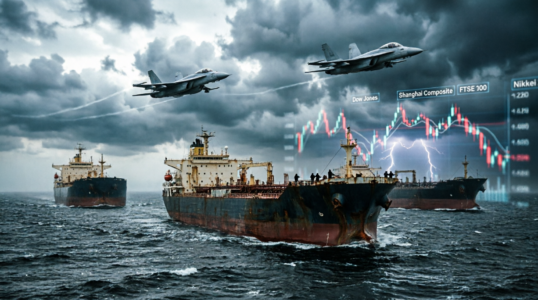
Iran–U.S.–Israel Tensions Trigger Global Oil & Economic Fears Amid Strait of Hormuz Crisis

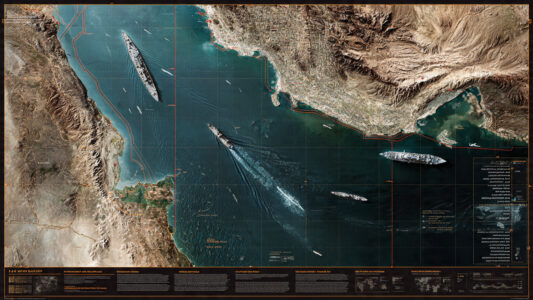
Iran–U.S.–Israel Tensions Shake Global Markets as Strait of Hormuz Crisis Escalates The world’s attention is once again fixed on the Middle East as rising tensions involving Iran, the United States, and Israel create fears of a wider geopolitical and economic crisis. The strategically vital Strait of Hormuz — one of the most important oil shipping routes on Earth — has become the center of global concern after reports of military activity and growing diplomatic uncertainty. The Strait of Hormuz handles nearly a fifth of the world’s oil supply, making any disruption a direct threat to global energy markets. Following recent developments in the region, oil prices surged sharply as investors feared interruptions to international shipping routes. Financial markets across Asia, Europe, and North America reacted with volatility, while economists warned of renewed inflation risks if tensions continue escalating. Reports suggest that diplomatic discussions between Washington and Tehran may still be possible, offering a narrow window for de-escalation. However, military movements and aggressive rhetoric from multiple sides continue to fuel uncertainty worldwide. Analysts say the situation is especially delicate because even minor disruptions in the Gulf region can rapidly affect fuel prices, transportation costs, manufacturing, and global trade. Energy experts believe the crisis highlights how interconnected the global economy remains with Middle Eastern stability. Countries heavily dependent on imported oil are already preparing contingency plans as traders monitor every development closely. Shipping insurance costs in the Gulf region have reportedly increased, while energy companies remain on alert for further disruptions. Beyond energy concerns, the geopolitical implications are equally significant. The United States continues balancing its support for Israel while attempting to prevent a broader regional conflict. Iran, meanwhile, has warned against foreign military pressure near its territorial waters. International organizations including the United Nations and NATO are closely observing developments as diplomatic efforts intensify behind the scenes. The crisis is also dominating online discussions, with social media platforms flooded by debates over global security, oil dependency, and economic vulnerability. Investors, businesses, and governments alike are worried that prolonged instability could trigger another wave of global inflation at a time when many economies are still recovering from recent financial pressures. Stock markets have become increasingly sensitive to geopolitical headlines, with energy stocks experiencing gains while airline and transportation sectors face uncertainty due to rising fuel costs. Experts warn that if the Strait of Hormuz faces any prolonged blockade or major disruption, the economic consequences could extend far beyond the Middle East. Meanwhile, ordinary consumers worldwide are already feeling anxiety about potential increases in gasoline prices, shipping delays, and higher living costs. Economists note that energy inflation often impacts food prices, logistics, and consumer goods, creating ripple effects across nearly every sector of the economy. Despite fears of escalation, diplomatic observers remain cautiously hopeful that negotiations could prevent a wider conflict. Global powers are under pressure to stabilize the situation quickly before economic damage deepens further. For now, the Iran–U.S.–Israel tensions remain one of the most closely watched stories on the planet — a reminder of how geopolitical conflicts in one region can instantly influence markets, governments, and daily life around the world.

Breaking News

Global Economic Ripple Effects 2026: How War and Oil Volatility Are Shaking Markets

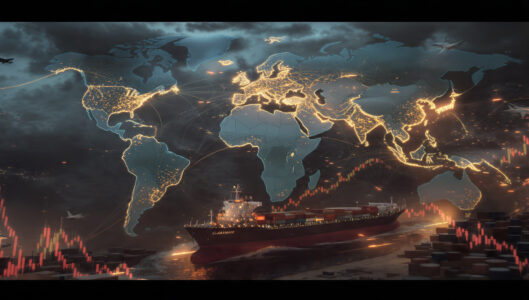
In 2026, the global economy finds itself navigating a period of heightened uncertainty as geopolitical tensions ripple across industries and financial systems. What begins as a regional conflict quickly transforms into a worldwide economic concern, affecting everything from stock markets to airline operations. The interconnected nature of today’s global economy means that no sector remains untouched when instability strikes key regions—especially those tied to energy supply. At the center of this disruption is the volatility in oil prices. Crude oil, often referred to as the lifeblood of industrial economies, has experienced sharp fluctuations due to ongoing tensions in critical transit routes like the Strait of Hormuz. Even minor disruptions in this region can send shockwaves through global markets, as a significant portion of the world’s oil supply passes through these waters. As a result, countries heavily reliant on oil imports are facing rising costs, which in turn fuel inflation and strain national budgets. Stock markets around the world have responded swiftly to these developments. Major indices such as the S&P 500, FTSE 100, and Nikkei 225 have shown increased volatility, reflecting investor anxiety. Market participants are shifting their strategies, moving away from riskier assets and toward safer investments such as gold and government bonds. This “risk-off” sentiment highlights a broader concern: when geopolitical uncertainty rises, investor confidence tends to fall. The airline industry is among the hardest hit. Companies like Emirates and Lufthansa are grappling with rising fuel costs, which represent a significant portion of their operating expenses. As oil prices climb, airlines are forced to either absorb the costs—impacting profitability—or pass them on to consumers through higher ticket prices. In many cases, reduced travel demand follows, creating a difficult cycle for the industry to break. Shipping and logistics sectors are also under immense pressure. Global giants such as Maersk and DHL are facing disruptions in key maritime routes. Increased insurance premiums, rerouted shipments, and delays are becoming the norm rather than the exception. These challenges not only raise operational costs but also contribute to supply chain bottlenecks, delaying the delivery of goods worldwide. For businesses, the impact is both immediate and strategic. Companies are reassessing supply chains, exploring alternative routes, and diversifying sourcing strategies to reduce dependence on high-risk regions. Many are accelerating investments in digital infrastructure and predictive analytics to better anticipate disruptions. The emphasis is shifting from efficiency to resilience—a fundamental change in how global business operates. Consumers, too, are feeling the effects. Rising transportation and production costs inevitably lead to higher prices for everyday goods, contributing to inflationary pressures across economies. From fuel at the pump to groceries on supermarket shelves, the cost of living is increasing, placing additional strain on households. Despite these challenges, periods of disruption often drive innovation. The current crisis is pushing governments and corporations to accelerate the transition toward renewable energy sources, reduce reliance on fossil fuels, and rethink global trade dependencies. While the short-term outlook remains uncertain, these long-term shifts could redefine the global economic landscape in meaningful ways. In essence, the economic ripple effects of geopolitical tensions extend far beyond the battlefield. They influence financial markets, reshape industries, and impact daily life across continents. As the world continues to monitor these developments, one thing is clear: in a deeply interconnected global economy, stability in one region is vital for prosperity everywhere.

Breaking News

Middle East War Triggers Global Energy Shock: Why the World Is Watching Closely

The world’s attention is firmly fixed on the escalating conflict in the Middle East, where rising tensions involving Iran are rapidly evolving into a crisis with far-reaching global consequences. At the heart of this unfolding situation lies not just geopolitics, but the lifeline of the modern economy—energy. The most critical flashpoint is the Strait of Hormuz, a narrow yet vital waterway through which nearly a fifth of the world’s oil supply passes. Any disruption here has immediate and dramatic implications for global markets. With increasing military posturing and uncertainty in the region, fears of supply interruptions have intensified, pushing energy markets into a state of volatility. A Crisis Beyond Borders While the conflict remains geographically concentrated, its impact is undeniably global. Oil prices have already shown signs of instability, and forecasts suggest a potential surge of up to 24% in energy costs throughout 2026. This isn’t just a concern for oil-dependent nations—it affects virtually every country, industry, and consumer. From transportation and manufacturing to agriculture and logistics, energy is deeply embedded in the global economic system. A spike in oil prices translates directly into higher fuel costs, increased production expenses, and ultimately, rising prices for everyday goods. Inflation, already a pressing concern in many economies, could see renewed pressure as energy costs climb. Ripple Effects Across Industries The shipping and logistics sectors are among the first to feel the strain. Major global shipping routes depend heavily on stability in the Middle East, and any disruption forces rerouting, delays, and increased operational costs. Airlines, too, face rising fuel expenses, which often lead to higher ticket prices and reduced travel demand. Businesses worldwide are responding quickly. Companies are reassessing supply chains, exploring alternative energy sources, and hedging against price volatility. Governments, on the other hand, are considering strategic reserves, policy interventions, and diplomatic efforts to stabilize the situation. For emerging economies, the stakes are even higher. Many rely heavily on imported fuel, making them particularly vulnerable to price shocks. A prolonged crisis could slow economic growth, strain public finances, and widen global inequality. Markets on Edge Financial markets have reacted swiftly to the uncertainty. Energy stocks are seeing increased activity, while broader markets remain cautious. Investors are closely monitoring developments, aware that any escalation could trigger further economic instability. The situation also highlights the fragile balance of global energy dependence. Despite ongoing efforts toward renewable energy, the world still relies heavily on oil and gas—especially in times of crisis. This dependence makes geopolitical tensions in energy-rich regions especially impactful. Why This Story Dominates Global Headlines This crisis stands out not just because of the conflict itself, but because of its interconnected impact: Economic Pressure: Rising fuel prices directly influence inflation and cost of living worldwide Global Reach: Every nation, whether oil producer or consumer, feels the effects Business Disruption: Supply chains, transportation, and production are all at risk Strategic Importance: Control and stability of key routes like the Strait of Hormuz are crucial In essence, this is not just a regional issue—it is a global economic event unfolding in real time. Looking Ahead As the situation continues to develop, the world watches closely. Diplomatic efforts, military decisions, and market reactions will all play a role in shaping the outcome. For now, uncertainty remains the dominant theme. What is clear, however, is that this crisis underscores a larger reality: in an interconnected world, regional conflicts can quickly become global challenges. The Middle East energy crisis is a powerful reminder of how deeply linked geopolitics and economics truly are.

Breaking News

The 60-Day Clock: Trump, Iran, and the War Powers Act Crisis

The Constitutional Brinkmanship: Is the Iran Conflict Officially Over? The War Powers Resolution was designed to be a “check and balance,” requiring any President to seek Congressional authorization within 60 days of introducing U.S. Armed Forces into “hostilities.” Today, that deadline arrives following the massive kinetic exchanges that shook the Persian Gulf in early March. To avoid the political and legal hurdle of a formal declaration of war or a joint resolution, President Trump recently submitted a formal notification to Congress. His message was succinct: “Hostilities have terminated.” By claiming the active conflict has ended, the administration argues that the 60-day clock has reset, allowing U.S. forces to remain in the region under “defensive posturing” rather than “active combat.” The “Unprecedented Damage” vs. The Official Narrative The White House’s claim of termination is being met with fierce skepticism from both sides of the aisle. Critics point to the recent satellite imagery of U.S. bases in the Gulf, which show “unprecedented damage” from ballistic missile strikes and long-range drone swarms during the April skirmishes. Legal scholars argue that if U.S. personnel are still under fire—and if the U.S. is still conducting “retaliatory strikes” to maintain the blockade—then hostilities have not terminated in any meaningful sense. The “Mission Accomplished” rhetoric of the past is being recycled, but with a new, 2026 legal twist: the attempt to redefine “war” as “intermittent engagement.” The Mechanics of the War Powers Act The 1973 Act was born from the shadows of the Vietnam War to prevent “forever wars” initiated by the executive branch. Under the law: Notification: The President must notify Congress within 48 hours of deploying troops. The 60-Day Clock: If Congress does not authorize the action, the President has 60 days to withdraw forces. The 30-Day Buffer: An additional 30 days are allowed for a safe withdrawal. By declaring the conflict over on day 59, the administration is effectively performing a “legal reset.” If skirmishes resume tomorrow, the White House could argue that a new 48-hour notification window has opened, starting a brand-new 60-day clock. A Precedent for the AI-Drone Era Lawmakers are particularly concerned about how the War Powers Act applies to autonomous warfare. If a conflict is fought primarily through “loitering munitions” (suicide drones) and cyber-attacks rather than boots on the ground, does the “hostilities” definition change? Proponents of the administration’s move argue that since no “major ground invasion” has occurred, the War Powers Act is being interpreted too broadly by “activist” members of Congress. Opponents, however, warn that allowing the President to bypass Congress through semantic loopholes sets a dangerous precedent for future global conflicts. Conclusion: The Looming Monday Deadline As the clock hits zero this weekend, the U.S. finds itself in a constitutional grey zone. If President Trump continues to order strikes without a new Congressional mandate, he risks a Supreme Court challenge or even impeachment proceedings from a divided House. The Persian Gulf remains a powder keg, but the “legal war” in Washington is just as intense. Whether the 60-day clock is a shield for democracy or a toothless relic of the past will be decided in the coming days. The world is watching to see if the U.S. will recommit to the rule of law or continue the path of “executive-led” global policing.

Breaking News

NPT Review Conference 2026: AI Command and Nuclear Rhetoric Take Center Stage

The Shadow of the Atom: AI and the “New Cold War” at the 2026 NPT Review The halls of the UN are echoing with a warning that many hoped was a relic of the 20th century. UN officials opened the 2026 NPT Review Conference this week with a sobering assessment: nuclear rhetoric has not only made a comeback—it has become a primary tool of modern statecraft. However, unlike the Cold War of the 1960s, the 2026 crisis is being defined by a new, invisible player: Autonomous Decision-Making Systems. The AI Command Crisis: “Launch on Algorithm” The most trending—and terrifying—theme of the 2026 conference is the integration of Artificial Intelligence into nuclear command-and-control (NC2) systems. For decades, the “Human-in-the-Loop” principle was the bedrock of nuclear safety. Today, as global powers race to decrease “decision time” in response to hypersonic missile threats, that loop is shrinking. Younger activists, led by the Generation Zero coalition, have occupied the plaza outside the UN, protesting what they call “Launch on Algorithm.” Their fear is that an AI-driven early warning system could misinterpret a non-threatening event—such as a satellite malfunction or a cyber-spoofing attack—as a first strike, triggering an automated retaliatory response before a human leader can intervene. The Erosion of Taboos The conference comes at a time when the “nuclear taboo”—the international norm against the use of nuclear weapons—is under unprecedented strain. Diplomatic observers point to three primary drivers of this erosion: Tactical Normalization: The increased talk of using “low-yield” tactical nuclear weapons in regional conflicts has lowered the psychological threshold for nuclear use. Hypersonic Proliferation: The deployment of missiles that can strike targets in under ten minutes has essentially eliminated the “diplomatic window” during a crisis. The Collapse of New START: With the final expiration of major arms control treaties, there are currently no active limits on the nuclear arsenals of the world’s two largest superpowers. The Activist Surge: A New Generation’s Fear Unlike the anti-nuclear movements of the 1980s, the 2026 movement is digitally native and focused on the intersection of cyber-security and nuclear safety. Activists are demanding a “Global AI-Nuclear Ban,” a proposed treaty that would legally prohibit the use of autonomous systems in deciding to launch nuclear weapons. “My generation grew up with AI in our pockets, so we know better than anyone how often it ‘hallucinates’ or glitches,” said one 19-year-old delegate from the International Campaign to Abolish Nuclear Weapons (ICAN). “Putting an AI in charge of the apocalypse isn’t progress; it’s a death sentence.” The Diplomatic Gridlock Inside the conference rooms, the mood is grim. Traditional nuclear-armed states remain hesitant to sign onto broad AI bans, citing the need for “technological parity” with adversaries. The “Non-Aligned Movement” (NAM) of non-nuclear states is growing increasingly frustrated, accusing the big powers of ignoring their disarmament obligations under Article VI of the NPT. Conclusion The 2026 NPT Review Conference is a crossroads for humanity. As UN Secretary-General Antonio Guterres warned in his opening remarks, “The world is one miscalculation, one glitch, one algorithm away from catastrophe.” The goal for the next three weeks in New York isn’t just to prevent the spread of weapons, but to re-humanize a system that is rapidly becoming automated. In the age of AI, the ultimate “fail-safe” remains a human heart and a human mind. Whether the diplomats in New York can codify that into a treaty will determine the safety of the next century.

Breaking News

Ukraine Strikes Tuapse Oil Terminal: Global Fuel Supply in Peril

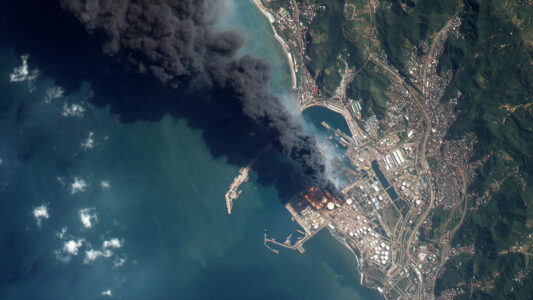
The Black Sea Inferno: Ukraine’s Campaign to “Defund” the Russian War Machine Ukrainian Unmanned Systems Forces (USF) launched a precision drone strike against the Tuapse Oil Refinery and Marine Terminal in Russia’s Krasnodar Krai. The facility, operated by Rosneft, is Russia’s only major refinery on the Black Sea coast and serves as a primary logistical bridge for petroleum exports. This latest strike is the climax of an aggressive April campaign that has targeted the facility four times. The cumulative damage has now forced an indefinite suspension of operations at one of Russia’s most technologically advanced processing sites. The Tuapse Disaster: “Black Rain” and Economic ParalysisReports from the ground in Tuapse describe a scene of industrial devastation. The strikes have reportedly destroyed at least 24 storage tanks and severely damaged primary refining units (AVT-4). The intensity of the fires was so great that residents reported a phenomenon of “black rain”—oily residue and soot falling across the city as the smoke plume reached record heights. Economically, the impact is severe. The Tuapse refinery has an annual capacity of 12 million tonnes, and its closure removes a significant portion of Russia’s refined product exports from the global market. A Global Supply Shock: $126 and RisingThe strike on Tuapse couldn’t have come at a worse time for the global economy. With the Strait of Hormuz currently under a de facto blockade due to the US-Iran standoff, the world is facing a rare “dual-front” energy crisis. The Western Front: Ukraine’s “long-range sanctions” have reduced Russian refinery output to its lowest level since December 2009, averaging just 4.69 million barrels per day. The Eastern Front: The Iranian standoff has choked nearly 20% of the world’s daily oil supply. This “pincer movement” on energy has pushed Brent Crude past $126 a barrel. Global economists warn that if Russia cannot stabilize its domestic fuel supply, it may be forced to implement an all-out export ban on refined products like diesel and gasoline to prevent internal civil unrest, further starving the global market. The Strategy of “Long-Range Sanctions”Ukrainian President Volodymyr Zelenskyy noted that these strikes have already cost the Russian economy an estimated $7 billion since the start of 2026. By targeting the “heart” of Russia’s oil-dollar revenue—refineries and export terminals—Kyiv is attempting to cripple Moscow’s ability to fund its military operations. Unlike the first two years of the war, where infrastructure strikes were sporadic, 2026 has seen a shift toward industrial-scale destruction. Ukrainian drones are now striking targets over 1,600 kilometers away, proving that no Russian energy asset is out of reach. ConclusionThe 2026 “War of the Refineries” is no longer just a regional conflict; it is a global economic event. As the Tuapse terminal continues to burn, the ripples are being felt at gas stations in London, New York, and Mumbai. With the global fuel supply crisis reaching a boiling point, the international community is left to wonder: how much more pressure can the energy market take before it reaches a total collapse? For now, the smoke over the Black Sea is a clear signal that the cost of war is only going to get higher.

Breaking News

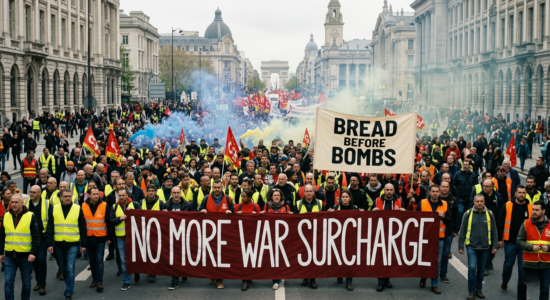
Global May Day Blackouts: Protests Paralyze US and Europe Over War Costs

The Refusal: Why the West is Standing Still on May 2 The silence in major financial hubs like New York, London, and Berlin is deafening. For the second consecutive day, the “No School, No Work, No Shopping” directive issued by a coalition of international trade unions and grassroots activists has seen a record-breaking participation rate. The movement is driven by a singular, potent message: the working class refuses to fund or suffer for a regional war that is draining domestic treasuries and emptying consumer bank accounts. The “Price of War” at the Pump The catalyst for this unprecedented walkout is the direct link between the US-Iran standoff and the domestic cost of living. With Brent Crude hovering near $126 a barrel, the average price of gasoline in the U.S. has surged past $6.50 per gallon in several states, while European electricity bills are projected to rise by another 40% by summer. “We are being told there is no money for housing, no money for healthcare, and no money for education,” said a representative for the Unified Trades Alliance during a rally in Washington D.C. “Yet, there is an endless supply of capital for aircraft carriers and blockades. We refuse to pay the price for war while our families freeze in the winter and starve in the spring.” The School and Retail Shutdown Unlike previous labor movements, the 2026 Blackout has successfully integrated the education and retail sectors. Education: Over 400 university campuses across the West have remained closed, with students and faculty pivoting from academic lectures to “teach-ins” regarding the humanitarian crisis in Gaza and the economic impact of the Strait of Hormuz blockade. Retail: The “No Shopping” pledge has hit e-commerce giants and brick-and-mortar retailers alike. Preliminary data suggests a 65% drop in consumer spending across the UK and France over the last 48 hours, as protesters aim to “starve the machine” that funds military expansion. Government Response and the Ceasefire Demand The political pressure is mounting. Protesters are demanding an immediate and permanent ceasefire in the Middle East, along with an “Emergency Energy Subsidy” funded by windfall taxes on defense contractors and oil majors. While some government officials have branded the strikes as “economically reckless,” the sheer scale of the disruption—including the grounding of regional flights and the halting of public transit in major cities—has forced a change in tone. Several European parliaments are reportedly convening emergency sessions today to discuss a “peace-for-stability” fiscal package, though the White House remains steadfast in its current military posture. The Global Solidarity Network Social media has played a pivotal role in maintaining the momentum. Using the hashtag #MayDayBlackout2026, organizers are coordinating “mutual aid” networks to provide food and childcare for striking workers. This digital infrastructure has allowed the movement to bypass traditional media narratives, creating a global sense of solidarity that transcends national borders. Conclusion The May Day Blackouts of 2026 represent a fundamental shift in civil disobedience. It is no longer just about wages or hours; it is a holistic demand for a “Peace Economy.” As the sun sets on day two of the shutdown, the global markets are watching with bated breath. If the workers don’t return by Monday, the economic damage could rival the Great Recession, forcing world leaders to choose between military dominance and domestic stability. The world has stood still for 48 hours. The question now is: who will blink first?

Breaking News

US-Iran Standoff 2026: Trump Rejects Peace Deal as Oil Hits $126

The Brink of War: Trump Rejects Iranian Overture as Global Markets Shiver In a move that has sent shockwaves through the international community, President Donald Trump officially rejected a comprehensive peace proposal from Tehran today, May 2, 2026. The proposal, which was reportedly hand-delivered by Pakistani mediators following weeks of “back-channel” diplomacy, was dismissed by the White House as “insufficient” and “lacking enforceable guarantees.” The rejection marks a dangerous new phase in the US-Iran standoff, shifting the narrative from cautious diplomacy to a high-stakes military and economic blockade that threatens to reshape the global order. The Rejected Proposal: Too Little, Too Late? Details of the Iranian proposal remain partially classified, but sources suggest it included a staged de-escalation of uranium enrichment in exchange for the immediate lifting of energy sanctions. However, President Trump, speaking from the South Lawn of the White House, made his position clear: “We are not interested in half-measures or ‘wait-and-see’ agreements. Iran knows what it has to do. We want a full, permanent cessation of their nuclear ambitions and an end to their regional destabilization. Until then, the pressure stays on—maximum pressure.” The $126 Barrel: Global Markets in Freefall The immediate casualty of the collapsed peace talks has been the global energy market. Within hours of the announcement, Brent Crude surged past $126 a barrel, its highest level in real terms since the early 2020s. The volatility is driven by the looming threat of a total blockade of the Strait of Hormuz, the world’s most vital oil artery. Trump warned today that any attempt by Iran to disrupt shipping would be met with “unmatched force,” but he also cautioned that the standoff could lead to a maritime shutdown lasting “months, not weeks.” The “Months-Long” Blockade Strategy Military analysts are particularly concerned about Trump’s rhetoric regarding the duration of the conflict. By signaling that the U.S. is prepared for a months-long engagement, the administration is effectively telling global markets to prepare for a “new normal” of high energy costs. The “Strait Standoff” has already seen: Shipping Insurance Surges: Premiums for tankers traversing the Persian Gulf have increased by 400% in the last 72 hours. Supply Chain Disruptions: Manufacturers in Europe and Asia are reporting immediate delays in raw material deliveries as vessels take the longer, costlier route around the Cape of Good Hope. Strategic Reserves: Several G7 nations have begun tapping into their strategic petroleum reserves to stabilize domestic gas prices. The Diplomatic Vacuum With the rejection of the Pakistani-mediated deal, the diplomatic path forward has narrowed significantly. Traditional allies in Europe have expressed “grave concern” over the rejection, fearing that without a diplomatic off-ramp, the risk of a “miscalculation” leading to a full-scale kinetic war is at its highest point in decades. Tehran’s response has been defiant. In a televised address, Iranian officials warned that if they are barred from exporting oil, “no one in the region will be safe to do so.” Conclusion As the sun sets on May 2, 2026, the world finds itself in a precarious position. The “Maximum Pressure” campaign has reached its ultimate stress test. With President Trump holding a firm line and oil prices acting as a ticking time bomb for the global economy, the coming days will determine if 2026 will be remembered for a brilliant tactical victory or the start of a catastrophic regional war. For now, the world watches the horizon of the Persian Gulf, where the next move could change everything.

Breaking News

India’s UPI Hits 24,162 Crore Transactions in FY26: A Global Digital Gold Standard

The UPI Phenomenon: India’s Digital Payment Engine Hits a Historic Milestone In the annals of global finance, 2026 will be remembered as the year India’s digital public infrastructure (DPI) moved from an ambitious project to the undisputed global gold standard. According to record-breaking data released for the 2025-26 fiscal year (FY26), India’s Unified Payments Interface (UPI) has processed a staggering 24,162 crore transactions. This figure represents a 27% year-on-year growth in volume, with the total value of transactions soaring to ₹314 lakh crore. To put this in perspective, UPI now accounts for nearly 49% of the world’s real-time digital payments, a feat that has global economists and policy makers looking toward New Delhi for the future of financial inclusion. From Urban Hubs to “Last-Mile” VillagesThe most significant aspect of the FY26 data isn’t just the sheer volume, but the demographics of adoption. UPI is no longer just a tool for urban tech-savants; it has become the lifeblood of rural and semi-urban India (often referred to as “Bharat”). According to industry stakeholders, the surge was driven by:Micro-Transactions: Over 70% of these 24,162 crore transactions are low-value “micro-payments” (under ₹500), replacing cash for everything from street-side tea to local transport.Merchant Integration: The number of UPI QR codes in India has surpassed 730 million, ensuring that even the smallest roadside vendor can participate in the formal economy. Smartphone Penetration: As 5G reaches deeper into the Indian hinterland, the “ease of use” of the UPI interface has made it the default payment rail for millions of first-time bank account holders.The “Viksit Bharat” PillarGovernment officials and economists cite this data as a primary pillar of the “Viksit Bharat” (Developed India) 2047 vision. By bringing individuals and micro-entrepreneurs into the formal financial system, UPI creates a massive “data trail” that allows these previously unbanked citizens to access formal credit, insurance, and investment products. “Digital payments are no longer just about growth; they are a natural part of everyday life,” noted one fintech CEO following the data release. “In rural areas, consumers aren’t just trying digital payments—they are actively relying on them.” Global Expansion: The UPI FootprintAs of May 2026, the success of UPI is being exported. The system is now live or in pilot stages in over 8 countries, including the UAE, Singapore, France, and parts of neighboring South Asia. Global tourists and expatriates are increasingly using UPI-linked apps for cross-border remittances, further reducing the reliance on slow and expensive traditional banking networks. “India has demonstrated that you don’t need expensive credit card infrastructure to build a digital economy,” says a senior economist at a global development bank. “UPI is the most inclusive financial tool ever created.”The Road to FY27The momentum is showing no signs of slowing down. Early data for April 2026 already shows 22.35 billion transactions for the single month, suggesting that FY27 could see even higher benchmarks. With ongoing developments in UPI Lite (for offline payments) and credit-line integration on UPI, the interface is evolving into a comprehensive financial super-app. ConclusionThe 24,162 crore transactions of FY26 are a testament to the power of open-source, interoperable technology. India has not only bridged the digital divide but has built a highway over it. As the world watches, the “UPI model” continues to prove that when you make finance simple, secure, and free for the user, the entire economy rises with it.The gold standard has been set—and it’s a standard that is currently being scanned via a QR code in every corner of India.

Breaking News

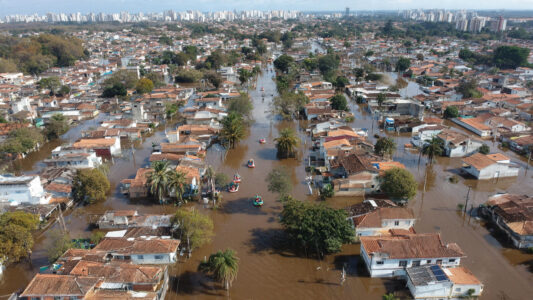
Brazil Floods 2026: Rio Grande do Sul Faces Climate-Migration Crisis

The Submerged State: Southern Brazil’s Endless Battle with Water The images coming out of Rio Grande do Sul this week are hauntingly familiar, yet unprecedented in their scale. For the third time in as many years, the state’s complex river systems have burst their banks, inundating hundreds of municipalities and forcing the state capital, Porto Alegre, into a standstill. While the “Great Flood” of 2024 was thought to be a once-in-a-century event, the May 2026 deluge has proven that the climate floor has shifted. With rainfall totals tripling monthly averages in just 48 hours, the infrastructure designed to protect millions is once again failing, leading to a humanitarian emergency that is redrawing the map of southern Brazil. The Human Toll: Beyond the Numbers As of this morning, civil defense agencies have confirmed a rising death toll, with dozens still missing in the interior highlands where landslides have swept away entire hillside communities. However, the most significant statistic of 2026 isn’t just the fatalities—it’s the displaced. Experts are identifying this as a landmark “climate-migration” event. Unlike previous years where residents waited for the waters to recede to rebuild, thousands are now abandoning their homes permanently. Entire neighborhoods in the Guaíba archipelago are being designated as “unrecoverable,” sparking a mass exodus of internal refugees seeking higher ground in the country’s north or in neighboring Uruguay. The Economic Aftershock: Rice and Resilience The timing of the floods has dealt a devastating blow to Brazil’s “breadbasket.” Rio Grande do Sul is responsible for roughly 70% of Brazil’s rice production. The 2026 floods hit at the tail end of the harvest season, submerging silos and destroying logistical corridors. Market analysts warn that global rice prices could see a sharp uptick as Brazil—traditionally an exporter—may be forced to import grain to meet domestic demand. To combat this, the federal government has activated the “Rio Grande Plan,” a R$ 14 billion restructuring fund aimed at moving agricultural processing hubs away from flood-prone river basins. “Psychic Disorganization”: The Invisible Crisis Psychologists on the ground describe a state of “psychic disorganization” among the survivors. For many, this is the third time they have lost everything since 2023. This cumulative trauma is driving the migration trend; the psychological cost of living in a “high-risk” zone has finally outweighed the cultural and historical ties many families have to the land. “We are no longer talking about disaster relief; we are talking about managed retreat,” says Dr. Elena Moraes, a climate researcher. “Rio Grande do Sul is the frontline of a global shift where the land simply refuses to be lived on anymore.” The Road Ahead: Building for a New Reality Governor Eduardo Leite has called for a radical “re-engineering” of the state. The 2026 recovery strategy focuses on: Elevated Infrastructure: Building “flood-resilient” schools and hospitals on high-altitude plateaus. River Management: Intensive dredging and the construction of new polders to redirect excess water away from urban centers. Migration Support: Providing financial pathways for families to relocate from “Permanent Preservation Areas” that are no longer safe for habitation. Conclusion The 2026 floods in Rio Grande do Sul are a sobering reminder that climate change is not a future threat, but a present-day reality for South America. As the waters slowly begin to recede, the state faces a choice: rebuild the past or design a different future. For the thousands currently sleeping in shelters, the dream of “going home” is being replaced by the necessity of moving on. Brazil is now at the forefront of a global challenge—learning how to govern, house, and heal a population that is being physically pushed by the changing planet.

Breaking News

Turkey Halts All Trade with Israel: A Global Economic Escalation

The Economic Iron Curtain: Turkey Severs All Trade Ties with Israel The “door has been closed” on nearly $9.5 billion in bilateral trade. In a historic escalation of regional tensions, Turkish President Recep Tayyip Erdoğan announced this week that Turkey will no longer engage in commercial exchange with Israel until a permanent ceasefire is achieved and humanitarian aid is allowed into Gaza without restriction. While Turkey had previously implemented partial bans on construction materials and aviation fuel, the May 2026 directive is absolute. It covers all products—from automotive parts to essential food supplies—marking the first time a major regional partner of Israel has weaponized total trade as a diplomatic tool in the current conflict. The “Dual Blockade” and Shipping Chaos The timing of Turkey’s trade halt coincides with a period of extreme volatility in the Middle East. The suspension has sent immediate shockwaves through the Mediterranean shipping lanes. The Turkish Ports Authority has reportedly expanded its ban to include any vessel flying an Israeli flag or owned by Israeli interests, while also prohibiting Turkish-flagged ships from docking at Israeli ports like Haifa and Ashdod. This “maritime divorce” is forcing global logistics firms to reroute thousands of containers through third countries like Greece and Cyprus, adding significant costs and delays to an already strained global supply chain. Energy Markets on Edge The trade suspension has particularly spooked the energy sector. Turkey is a critical transit hub for oil and gas pipelines that feed the Mediterranean. Market analysts are currently monitoring the Ceyhan pipeline terminal, fearing that the trade halt could eventually impact regional energy cooperation agreements. Coupled with the ongoing 2026 Strait of Hormuz crisis, which has seen seaborne oil trade drop by nearly 70% in some corridors, the Turkey-Israel rift is adding a “risk premium” to Brent Crude prices, which surged toward $120 per barrel following the announcement. The “Board of Peace” Paradox Ironically, the trade ban comes as Turkey participates in the “Board of Peace” (BOP), an international body charged with the post-war reconstruction of Gaza. Experts point out a glaring paradox: while Turkey is a logistical leader for aid, its trade ban on Israel—which controls the primary entry points into Gaza—makes the delivery of that aid a logistical nightmare. The Israeli government, through Foreign Minister Israel Katz, has branded the move as the behavior of a “dictator,” accusing Erdoğan of violating international trade agreements. Israel is reportedly already looking to “friend-shoring” alternatives, turning to India and the European Union to replace the cheap Turkish cement and steel that once fueled its construction boom. Conclusion The 2026 Turkey-Israel trade halt is more than a bilateral spat; it is a signal that the era of separating “business from politics” in the Middle East is over. As Turkey strictly implements these measures, the global economy is left to deal with the fallout: higher shipping costs, energy uncertainty, and a deeply polarized regional landscape. Until the “humanitarian tragedy” in Gaza is addressed to Ankara’s satisfaction, the once-thriving $9.5 billion trade bridge remains broken—with no immediate plans for repair.

Breaking News

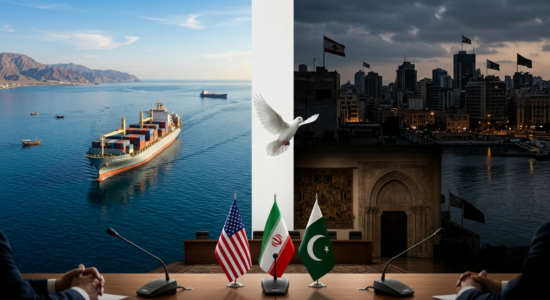
Middle East Crisis 2026: Iran Peace Proposal & Hezbollah Defiance

Hormuz Hope vs. Regional Defiance: The Fragile State of Middle East Diplomacy The geopolitical landscape of the Middle East has reached a critical juncture. As 2026 unfolds, a high-stakes “diplomatic chess match” is emerging between Tehran and Washington, even as secondary fronts in Lebanon and Gaza remain locked in cycles of violence and media obscurity. The world is watching closely to see if a breakthrough in the Strait of Hormuz can serve as a catalyst for broader regional stability or if entrenched local hostilities will derail the peace process. The Pakistan Channel: A New Proposal from Tehran In what is being hailed as the most significant diplomatic movement in months, Iran has officially delivered a comprehensive peace proposal to the United States. Utilizing Pakistan as a neutral mediator, Tehran has signaled a willingness to de-escalate the naval tensions that have paralyzed global trade. The core of the proposal is a high-stakes trade-off: Iran offers to fully reopen the Strait of Hormuz—the world’s most vital energy transit point—in exchange for a complete lifting of the U.S. naval blockade. For the global economy, which has been reeling from the “war surcharges” on oil and shipping insurance, this proposal represents a potential lifeline. However, Washington remains cautious. Strategists are currently weighing whether the reopening of the Strait is a genuine olive branch or a tactical maneuver to relieve economic pressure while Iran continues its regional posturing. Hezbollah’s Wall of Resistance While the seas may see a glimpse of calm, the land borders remain volatile. In a televised address that dampened hopes for a swift northern ceasefire, Hezbollah leadership officially rejected the current negotiation frameworks brokered by international intermediaries between Israel and Lebanon. The group’s high command vowed that “the resistance” would continue its operations, effectively decoupling its military strategy from the diplomatic efforts occurring in the Persian Gulf. This defiance poses a significant challenge for mediators who had hoped that a deal with Iran would naturally lead to a “domino effect” of peace among its regional allies. The Gaza Blackout: Media Giants Push Back Parallel to the military and diplomatic maneuvers is a growing battle over information. Since 2023, a strict ban on foreign journalists entering Gaza has created what human rights groups call an “information vacuum.” Now, a coalition of leaders from the world’s most influential media organizations—including the heads of major news networks and global agencies—has launched a coordinated campaign to pressure the Israeli government. Their demand is singular: lift the ban and allow independent reporting. “Journalism is not a luxury during wartime; it is a necessity for accountability,” stated a joint letter from the coalition. “The world cannot understand a conflict it is not permitted to see.” The Road Ahead The coming weeks will be decisive. If the U.S. accepts the Pakistani-mediated proposal, the sudden influx of oil could stabilize global markets and lower the “survival” costs currently fueling protests worldwide. However, without a resolution to the Hezbollah-Israel stalemate or a transparent accounting of the humanitarian situation in Gaza, any peace in the Strait of Hormuz may be a fragile one.

Breaking News

Global May Day 2026: Millions Protest Inflation & “Iran Surcharge”

Beyond Wages: Millions Rise for Survival in Global May Day Rallies From the boulevards of Paris to the bustling hubs of Manila, Jakarta, and Seoul, the 2026 International Workers’ Day has transformed from a traditional celebration of labor into a desperate global outcry. This year, the rhythmic chanting of millions carries a sharper edge. The core demand is no longer just for “better wages,” but for “survival”—a direct response to record-high inflation and a burgeoning energy crisis that trade unions are calling the “Iran Surcharge.” The “Iran Surcharge”: Refusing to Pay for War The shadow of geopolitics loomed large over European demonstrations. The European Trade Union Confederation (ETUC) led massive marches across the continent under a provocative new banner: “Working people refuse to pay the price for Trump’s war.” The slogan targets the economic fallout from the escalating conflict involving the U.S. and Iran, which has sent global oil prices soaring by over 50% in mere months. In London and Paris, protesters carried mock gasoline pumps draped in black, symbolizing the “Iran Surcharge” that has turned commuting and heating into luxury expenses. “We are not the architects of this conflict, yet we are the ones being billed for it,” said a representative for the ETUC. “When oil prices spike, it isn’t the billionaires who skip meals; it’s the working class.” Clashes and Crackdowns in Istanbul While many rallies remained peaceful, the atmosphere in Turkey was one of defiance and friction. For the third consecutive year, the government issued a strict ban on marches in Istanbul’s historic Taksim Square, citing security concerns. However, thousands of activists and union members attempted to bypass police barricades to reach the symbolic site. The result was a chaotic confrontation; Turkish police deployed tear gas and water cannons to disperse the crowds. Authorities confirmed that over 57 people were arrested during the scuffles, yet the protesters remained undeterred, shouting slogans against the rising cost of bread and fuel. A Unified Global Front The scale of this year’s mobilization highlights a rare moment of global synchronicity: Manila & Jakarta: Protesters focused on the “unprecedented spikes” in fuel and food prices, linking local poverty directly to the Middle Eastern conflict. Seoul: Labor groups held a massive sit-in, demanding government intervention to decouple local energy prices from the volatile global market. South America: In Buenos Aires and Santiago, the focus shifted toward “economic relief packages,” as inflation threatened to erase a decade of middle-class gains. The Shift from Prosperity to Protection The 2026 May Day rallies signal a fundamental shift in the labor movement. The era of bargaining for “extras”—shorter weeks or better bonuses—has been eclipsed by a defensive struggle to maintain basic living standards. As the “Iran Surcharge” ripples through every sector from transport to agriculture, the message from the streets is clear: the global workforce is no longer willing to be the collateral damage of geopolitical brinkmanship.

error: Content is protected !!
Scroll to Top