Skip to content
 In 2026, the global economy finds itself navigating a period of heightened uncertainty as geopolitical tensions ripple across industries and financial systems. What begins as a regional conflict quickly transforms into a worldwide economic concern, affecting everything from stock markets to airline operations. The interconnected nature of today’s global economy means that no sector remains untouched when instability strikes key regions—especially those tied to energy supply.
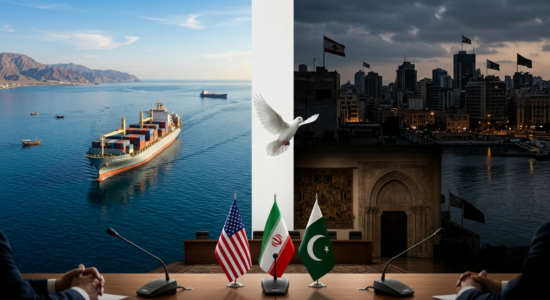
At the center of this disruption is the volatility in oil prices. Crude oil, often referred to as the lifeblood of industrial economies, has experienced sharp fluctuations due to ongoing tensions in critical transit routes like the Strait of Hormuz. Even minor disruptions in this region can send shockwaves through global markets, as a significant portion of the world’s oil supply passes through these waters. As a result, countries heavily reliant on oil imports are facing rising costs, which in turn fuel inflation and strain national budgets.
Stock markets around the world have responded swiftly to these developments. Major indices such as the S&P 500, FTSE 100, and Nikkei 225 have shown increased volatility, reflecting investor anxiety. Market participants are shifting their strategies, moving away from riskier assets and toward safer investments such as gold and government bonds. This “risk-off” sentiment highlights a broader concern: when geopolitical uncertainty rises, investor confidence tends to fall.
The airline industry is among the hardest hit. Companies like Emirates and Lufthansa are grappling with rising fuel costs, which represent a significant portion of their operating expenses. As oil prices climb, airlines are forced to either absorb the costs—impacting profitability—or pass them on to consumers through higher ticket prices. In many cases, reduced travel demand follows, creating a difficult cycle for the industry to break.
Shipping and logistics sectors are also under immense pressure. Global giants such as Maersk and DHL are facing disruptions in key maritime routes. Increased insurance premiums, rerouted shipments, and delays are becoming the norm rather than the exception. These challenges not only raise operational costs but also contribute to supply chain bottlenecks, delaying the delivery of goods worldwide.
For businesses, the impact is both immediate and strategic. Companies are reassessing supply chains, exploring alternative routes, and diversifying sourcing strategies to reduce dependence on high-risk regions. Many are accelerating investments in digital infrastructure and predictive analytics to better anticipate disruptions. The emphasis is shifting from efficiency to resilience—a fundamental change in how global business operates.
Consumers, too, are feeling the effects. Rising transportation and production costs inevitably lead to higher prices for everyday goods, contributing to inflationary pressures across economies. From fuel at the pump to groceries on supermarket shelves, the cost of living is increasing, placing additional strain on households.
Despite these challenges, periods of disruption often drive innovation. The current crisis is pushing governments and corporations to accelerate the transition toward renewable energy sources, reduce reliance on fossil fuels, and rethink global trade dependencies. While the short-term outlook remains uncertain, these long-term shifts could redefine the global economic landscape in meaningful ways.
In essence, the economic ripple effects of geopolitical tensions extend far beyond the battlefield. They influence financial markets, reshape industries, and impact daily life across continents. As the world continues to monitor these developments, one thing is clear: in a deeply interconnected global economy, stability in one region is vital for prosperity everywhere.