Skip to content
BRICS Expansion & Global Realignment
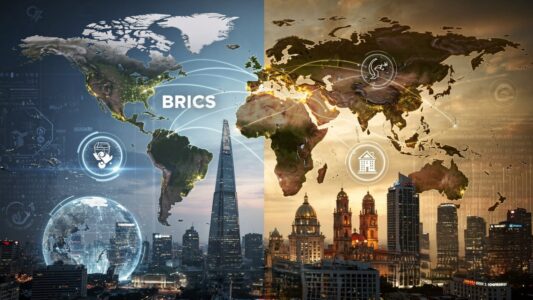 The rise of BRICS is rapidly becoming one of the most important geopolitical developments of 2026. Originally formed as an economic grouping of Brazil, Russia, India, China, and South Africa, the bloc is now expanding its influence far beyond economics. With new member nations joining and global tensions reshaping alliances, BRICS is increasingly viewed as a challenge to Western-led political and financial systems.
At the core of this transformation is a growing desire among emerging economies to reduce dependence on Western institutions such as the U.S. dollar-based financial system and organizations traditionally dominated by Western powers. Countries within BRICS have been exploring alternative payment systems, local currency trade agreements, and new development financing structures aimed at creating a more balanced global economic order.
The expansion of BRICS reflects broader dissatisfaction among many nations regarding global governance. Several countries in Asia, Africa, and the Middle East are seeking stronger representation in international decision-making and are increasingly aligning with BRICS as a platform for economic cooperation and geopolitical influence. This shift has accelerated amid ongoing trade wars, sanctions, and geopolitical rivalries involving the United States and its allies.
One of the most significant drivers behind BRICS expansion is the push for a multipolar world order. Instead of a system heavily influenced by a single superpower or Western alliance, BRICS nations are advocating for a more distributed balance of power where emerging economies have greater influence over trade, diplomacy, and financial policy. Supporters argue that this approach could create a more inclusive global system better suited to modern economic realities.
China has emerged as one of the dominant forces within BRICS, using its economic power and global infrastructure investments to strengthen the bloc’s international reach. Meanwhile, India continues to position itself as a strategic balancing power, maintaining strong ties with both Western economies and BRICS partners. Russia, facing heavy Western sanctions, increasingly views BRICS as a critical platform for maintaining economic and diplomatic influence globally.
However, despite its growing influence, BRICS faces significant internal challenges. Differences over geopolitical conflicts, including Iran-related diplomacy and broader international tensions, have exposed divisions among member states. While some BRICS nations support stronger alignment against Western sanctions and policies, others remain cautious about taking sides in global conflicts. These differences reveal that BRICS is not a unified political alliance but rather a coalition of nations with varying priorities and strategic interests.
The debate surrounding Iran has particularly highlighted these divisions. Countries such as China and Russia have shown greater willingness to resist Western pressure and sanctions tied to Iran, while other members have adopted more neutral or balanced approaches. These disagreements illustrate the complexities of maintaining unity within a rapidly expanding geopolitical bloc.
Economically, BRICS continues to gain momentum through trade partnerships, energy cooperation, and investment initiatives. Discussions around reducing reliance on the U.S. dollar have intensified, with some members promoting trade settlements in local currencies. While the dollar remains dominant globally, the increasing interest in alternative financial systems signals a long-term shift in international economic strategy.
The expansion of BRICS is also influencing global diplomacy. Nations seeking alternatives to traditional Western partnerships are increasingly engaging with BRICS-led initiatives. This has created a competitive geopolitical environment where influence is no longer concentrated solely in Washington or European capitals but increasingly shared among multiple power centers.
Global markets and investors are closely watching these developments. A stronger BRICS alliance could reshape trade flows, commodity markets, energy pricing, and financial systems. Businesses worldwide are adapting to the possibility of a more fragmented yet interconnected global economy.
At the same time, critics warn that internal political differences and competing national interests could limit BRICS’ long-term effectiveness. Questions remain about whether the bloc can move beyond economic coordination to become a truly cohesive geopolitical force.
In conclusion, the expansion of BRICS represents a historic shift in global power dynamics. As countries explore alternatives to Western-led systems and seek greater strategic independence, the world is steadily moving toward a more multipolar era. Whether BRICS can maintain unity while expanding its influence will likely shape international politics and economics for decades to come.