...

The Elite's Review – Global Business Magazine

AI

AI

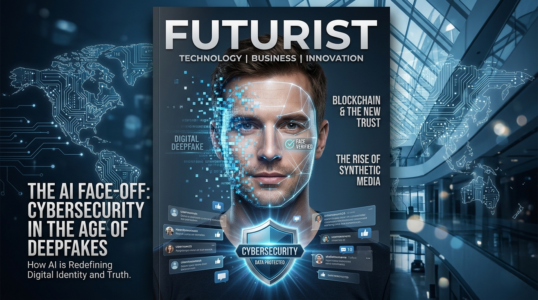
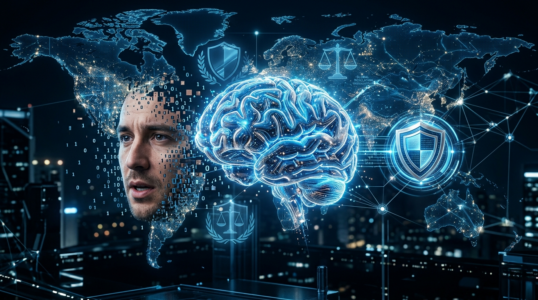
Digital Trust and Deepfakes 2026: Fighting AI Misinformation in the Digital Age

Digital Trust, Deepfakes & Misinformation: The New Challenge of the AI EraArtificial intelligence is transforming how people create, consume, and share information. From generating realistic images and videos to producing human-like text in seconds, AI has unlocked unprecedented opportunities for innovation. However, as these technologies become more powerful and accessible, a new challenge has emerged: maintaining digital trust in an increasingly synthetic world. Today, governments, technology companies, media organizations, and cybersecurity experts are grappling with the rapid growth of deepfakes and AI-generated misinformation. The concern is not merely technological—it is about protecting public trust, safeguarding institutions, and preserving confidence in the information ecosystem that powers modern society. The Rise of Deepfake Technology Deepfakes use artificial intelligence to create highly realistic digital content that can imitate real people, voices, and events. What began as a niche technological experiment has evolved into a sophisticated tool capable of generating convincing videos, audio recordings, and images. Advances in generative AI have dramatically improved the quality of synthetic media. As a result, distinguishing authentic content from manipulated material is becoming increasingly difficult, even for trained professionals. While deepfake technology has legitimate uses in entertainment, education, and content production, it has also raised concerns about misuse, deception, and digital manipulation. Why Digital Trust Matters Trust is the foundation of the digital economy. Consumers rely on online information to make purchasing decisions. Investors use digital data to evaluate financial opportunities. Citizens depend on credible information to participate in public discussions and democratic processes. When people begin to question whether content is real or artificially generated, confidence in digital communication can weaken. This erosion of trust may affect businesses, governments, financial markets, and social institutions alike. Experts increasingly warn that the challenge of the next decade may not be information scarcity, but information credibility. The Growing Threat of AI-Generated Misinformation AI tools now have the ability to create large volumes of realistic content at unprecedented speed. False narratives, manipulated media, fabricated news reports, and impersonated voices can spread rapidly through social media platforms and online communities. Because synthetic content often appears authentic, misinformation can reach millions before corrections are issued. This creates significant challenges during elections, public emergencies, financial events, and major global crises where accurate information is essential. The scale and efficiency of AI-generated content have transformed misinformation from a manual effort into an automated and highly scalable process. Governments and Regulators Respond Around the world, policymakers are working to address emerging risks associated with deepfakes and AI-generated media. Regulatory proposals include transparency requirements, content labeling systems, digital authentication standards, and penalties for malicious misuse of synthetic content. Several governments are also exploring legislation requiring platforms to identify AI-generated material and improve content verification processes. The objective is to protect consumers and institutions while allowing innovation to continue. However, creating effective regulations remains challenging due to the rapid pace of technological advancement and the global nature of digital platforms. Technology Companies Build New Safeguards Leading technology companies are investing heavily in tools designed to improve digital trust. These efforts include content watermarking, AI-generated content detection systems, verification technologies, cryptographic authentication, and partnerships with fact-checking organizations. Many platforms are also developing methods to provide greater transparency regarding how content is created and distributed. Industry leaders increasingly recognize that trust and safety will become critical competitive advantages in the AI era. The ability to verify authenticity may soon become as important as the ability to create content itself. Looking Ahead Artificial intelligence will continue to reshape communication, business, and society. The challenge facing the world is not whether AI-generated content will become more common—it undoubtedly will. The real question is whether governments, businesses, and technology companies can build systems that preserve trust while embracing innovation. As deepfakes become more sophisticated and misinformation techniques evolve, digital trust may become one of the most valuable assets of the modern economy. The decisions made today regarding AI governance, transparency, and accountability could determine how confidently societies navigate the digital future. In an age where seeing is no longer believing, trust itself may become the world’s most important currency.
AI

AI Governance 2026: How Governments Are Tackling Misinformation and Digital Trust

AI Governance and Misinformation: The Global Battle for Digital TrustArtificial intelligence is transforming the world at an unprecedented pace. From content creation and customer service to scientific research and business automation, AI technologies are becoming deeply integrated into everyday life. However, alongside these opportunities comes a growing challenge: how to manage AI-generated misinformation while preserving trust in digital information. Governments, technology companies, media organizations, and regulatory bodies are increasingly focused on developing frameworks that ensure AI remains a force for innovation without undermining public confidence in information systems. As AI-generated content becomes more sophisticated, the debate over governance, accountability, and digital trust has become one of the most important technology discussions of 2026. The Rise of AI-Generated Content Generative AI tools can now create realistic text, images, audio, and videos in seconds. These capabilities are revolutionizing industries by improving productivity and enabling new forms of creativity. Businesses are using AI to streamline operations, enhance customer experiences, and accelerate innovation. Educational institutions are exploring AI-powered learning tools, while healthcare organizations are leveraging AI to support research and diagnosis. Yet the same technology can also be used to create misleading content that appears authentic. As AI systems become more advanced, distinguishing between genuine and synthetic content is becoming increasingly difficult. The Growing Concern Over Misinformation One of the biggest concerns surrounding AI is its potential to amplify misinformation. AI-generated articles, manipulated images, and realistic video deepfakes can spread rapidly through social media platforms and online communities. In some cases, false information can influence public opinion, damage reputations, or create confusion during important events. The challenge is not simply the existence of misinformation—it is the speed and scale at which AI can produce and distribute it. As digital platforms become primary sources of information for millions of people, maintaining trust in online content has become a critical issue for policymakers and technology leaders. Governments Push for Regulation Around the world, governments are exploring new approaches to AI governance. Regulators are considering policies that promote transparency, accountability, and responsible AI development. Proposed measures include disclosure requirements for AI-generated content, standards for model safety testing, and rules designed to reduce harmful or deceptive uses of the technology. The goal is to balance innovation with public protection. Policymakers recognize that excessive restrictions could slow technological progress, while insufficient oversight could increase risks to society. Finding the right balance remains one of the most complex policy challenges of the digital age. The Role of Technology Companies Technology companies are also taking steps to address concerns about misinformation and digital trust. Many organizations are investing in content authentication systems, AI detection tools, watermarking technologies, and fact-checking partnerships. These efforts aim to help users identify synthetic content and verify the authenticity of digital media. Leading AI developers are increasingly emphasizing responsible development practices, safety testing, and transparency measures designed to reduce misuse. However, experts acknowledge that technology alone cannot solve the problem. Effective solutions will likely require collaboration among governments, businesses, researchers, media organizations, and civil society groups. Why Digital Trust Matters Trust is the foundation of modern digital economies. Consumers rely on accurate information when making purchasing decisions. Investors depend on credible data to evaluate markets. Citizens need reliable information to participate in democratic processes and public discussions. If confidence in digital content declines, the consequences could extend far beyond technology. Economic activity, public discourse, and institutional credibility may all be affected. For this reason, many analysts believe that digital trust will become one of the most valuable assets in the AI era. Looking Ahead Artificial intelligence is expected to continue evolving rapidly over the coming years. While the technology offers enormous benefits, its long-term success will depend on society’s ability to establish effective governance frameworks and maintain trust in digital information. The challenge is not whether AI will shape the future—it already is. The question now is how governments, businesses, and communities can ensure that innovation and trust advance together. As the global conversation around AI governance intensifies, the decisions made today may define the future of the digital world for decades to come.

AI

AI & Semiconductor War 2026: U.S.–China Tech Rivalry Intensifies

AI & Semiconductor War IntensifiesThe global race for artificial intelligence dominance has evolved into one of the most important technological and geopolitical battles of the modern era. As governments and technology giants compete for leadership in AI infrastructure and semiconductor production, the world is witnessing a rapidly escalating “AI and chip war” that could shape economic power, military strategy, and global influence for decades to come. At the center of this competition are major technology leaders such as OpenAI, Google DeepMind, and NVIDIA. These companies are driving the next generation of AI systems, while governments worldwide are investing billions into semiconductor manufacturing, cloud infrastructure, and advanced computing technology. What was once viewed as a purely commercial innovation race has now become deeply tied to national security and geopolitical strategy. One of the biggest drivers behind the AI boom is the massive demand for advanced semiconductors. AI systems require enormous computational power, and that power depends on highly specialized chips capable of handling complex machine learning models and data processing tasks. NVIDIA has emerged as a dominant force in this market, supplying AI processors used by businesses, governments, and research institutions around the world. The growing importance of semiconductors has intensified tensions between the United States and China. The United States has imposed restrictions on advanced chip exports and semiconductor manufacturing equipment aimed at slowing China’s progress in artificial intelligence and supercomputing. Washington argues that limiting China’s access to critical technologies is necessary to protect national security and maintain technological leadership. China, however, has responded aggressively by accelerating domestic semiconductor production and increasing investment in AI research. Beijing is pouring billions into local chip manufacturing companies and infrastructure projects in an effort to reduce reliance on foreign technology. Chinese firms are also developing alternative supply chains and strengthening partnerships with countries willing to cooperate outside Western-led restrictions. The AI race extends far beyond commercial competition. Artificial intelligence is increasingly connected to military technology, cybersecurity, surveillance systems, and strategic defense capabilities. Governments understand that future military and intelligence operations may depend heavily on AI-powered systems capable of processing vast amounts of data in real time. As a result, control over semiconductors and advanced computing has become a matter of national strategic importance. Massive investments in AI infrastructure are also transforming global markets. Technology companies are building huge data centers, cloud computing networks, and energy-intensive facilities to support next-generation AI models. This infrastructure boom is driving unprecedented demand for electricity, rare earth materials, and semiconductor supply chains, creating ripple effects across industries worldwide. Financial markets continue reacting strongly to AI-related developments. Investors view artificial intelligence as one of the most transformative technologies since the internet revolution, leading to surging valuations for chip manufacturers, cloud providers, and AI-focused firms. At the same time, analysts warn that the increasing concentration of power among a few major technology companies could create long-term economic and competitive risks. The rivalry between AI leaders has also intensified innovation speed. OpenAI, Google DeepMind, and other firms are rapidly developing more powerful AI systems capable of generating text, images, video, coding assistance, and advanced reasoning. This competition has accelerated global adoption of AI tools across industries such as healthcare, finance, manufacturing, education, and media. Despite the excitement, concerns surrounding AI continue to grow. Governments and researchers are debating regulation, ethics, privacy, misinformation, and job displacement caused by automation. Questions about AI safety and control have become central topics in international policy discussions, particularly as systems become more advanced and influential. The semiconductor war is also reshaping global alliances. Countries including Japan, South Korea, India, and members of the European Union are increasing investments in domestic chip manufacturing and technology partnerships. The goal is to reduce dependence on fragile global supply chains and secure access to critical computing infrastructure. Social media and international news coverage have amplified worldwide attention on the AI race. Every new AI breakthrough, chip announcement, or government policy instantly becomes a global conversation topic, reflecting how deeply technology is now connected to economics, politics, and global influence. In conclusion, the AI and semiconductor war is no longer just a technology story—it is a global power struggle shaping the future of economic growth, military capability, and international leadership. As nations and corporations compete for dominance in artificial intelligence and advanced computing, the decisions made today could determine the balance of global power for generations to come.

AI

AI Revolution 2026: How Artificial Intelligence Is Transforming the World

AI Revolution 2026: The Global Race Reshaping Technology & Power Artificial intelligence has become the most dominant technology story in the world, transforming industries, economies, and global competition at an unprecedented pace. From Silicon Valley to Beijing, governments and technology giants are racing to develop the next generation of AI systems capable of reshaping business, defense, healthcare, education, and everyday life. Leading the AI race are companies like OpenAI, Google DeepMind, Microsoft, Meta, and NVIDIA. These firms are investing billions into advanced AI models, powerful chips, and autonomous systems that could define the future of global innovation. The rapid rise of AI tools is already transforming workplaces worldwide. Businesses are increasingly using AI for customer service, data analysis, automation, marketing, software development, and creative content production. Experts believe AI-driven productivity could become one of the biggest economic shifts since the internet revolution. At the center of this boom is the global AI chip race. NVIDIA has emerged as one of the world’s most valuable technology companies due to massive demand for AI processors. These chips power everything from chatbots and image generation to autonomous vehicles and scientific research. Countries are now treating semiconductors as strategic national assets, leading to growing geopolitical tensions surrounding technology exports and manufacturing. Governments are also moving quickly to regulate artificial intelligence. Concerns around misinformation, cybersecurity, job disruption, and AI safety are pushing lawmakers to introduce new policies aimed at controlling how advanced AI systems are developed and deployed. International debates about “AI governance” have become increasingly urgent as technology evolves faster than regulation. Another major trend is the rise of AI assistants and autonomous agents. Modern AI systems are becoming more capable of handling complex tasks, making decisions, and interacting naturally with humans. Tech leaders predict that AI agents could eventually manage workflows, businesses, research tasks, and digital ecosystems with minimal human intervention. Meanwhile, competition between the United States and China is intensifying around AI leadership. Both nations see artificial intelligence as a critical factor in future economic and military dominance. This rivalry is accelerating investments in semiconductor manufacturing, cloud infrastructure, robotics, and advanced computing. Despite the excitement, experts continue to warn about risks associated with rapid AI expansion. Ethical concerns around bias, privacy, deepfakes, and job displacement remain central to global discussions. At the same time, many industries are struggling to adapt to the speed of technological change. Still, public fascination with AI continues to grow. Viral AI-generated videos, realistic digital assistants, and futuristic robotics demonstrations dominate social media daily. Investors, businesses, and governments increasingly view artificial intelligence not just as a tool—but as the foundation of the next technological era. As innovation accelerates, the AI revolution is no longer a future concept. It is happening now, reshaping the global balance of power and redefining how humanity works, communicates, and creates.

AI

Robotics & Humanoid AI 2026: How Intelligent Robots Are Transforming the Future

Robotics & Humanoid AI The next major technological revolution may not arrive through smartphones or software alone—it could walk, talk, and work alongside humans. Around the world, technology companies and robotics startups are investing billions into humanoid robots and AI-powered automation systems capable of transforming industries and daily life. From warehouse operations and healthcare support to household assistance and advanced manufacturing, robotics combined with artificial intelligence is quickly becoming one of the most talked-about innovation trends globally. The rapid progress in humanoid robotics is being driven by advances in artificial intelligence, machine learning, sensors, and computing power. Modern robots are no longer limited to repetitive industrial tasks. AI-enabled systems can now recognize environments, understand voice commands, navigate complex spaces, and even adapt to changing situations in real time. This new generation of robotics is designed to interact more naturally with people and perform tasks that previously required human flexibility and judgment. Several major technology companies are accelerating development in this sector. Firms focused on AI infrastructure and automation are investing heavily in robotics research, while startups are introducing increasingly advanced humanoid machines designed for commercial use. Viral demonstration videos showing robots walking, lifting objects, assisting workers, and interacting with humans have fueled enormous public fascination across social media platforms. Warehouse automation has become one of the earliest large-scale applications for robotics and AI integration. E-commerce and logistics companies are deploying intelligent robots capable of sorting inventory, transporting goods, and assisting with fulfillment operations. These systems help businesses increase efficiency, reduce operational costs, and address labor shortages in physically demanding environments. Healthcare is another area experiencing rapid transformation through robotics innovation. AI-powered robotic assistants are being developed to support elderly care, rehabilitation, patient monitoring, and hospital logistics. In some cases, robotic systems are already helping healthcare workers manage repetitive tasks, allowing medical professionals to focus more directly on patient care. Experts believe robotics could play a crucial role in addressing aging populations and healthcare workforce shortages globally. The rise of household robotics is also gaining momentum. Companies are exploring robots capable of cleaning homes, assisting with daily routines, and providing personalized support for families. As AI systems become more advanced, consumer-focused robots may eventually evolve into intelligent companions capable of understanding human behavior, managing schedules, and interacting naturally through voice and visual recognition. One of the key reasons robotics is trending worldwide is its potential impact on labor and the global economy. Businesses increasingly see automation as essential for improving productivity and maintaining competitiveness in rapidly evolving markets. Manufacturing facilities are integrating robotic systems capable of operating continuously with high precision, while service industries are experimenting with AI-driven customer support and autonomous delivery systems. However, the expansion of robotics also raises major questions about the future of work. Economists and policymakers are debating how automation may affect employment across industries. While robotics could eliminate certain repetitive jobs, it is also expected to create new opportunities in engineering, AI development, maintenance, robotics operations, and advanced manufacturing. Many experts argue that workforce adaptation and reskilling will become critical priorities in the coming decade. Artificial intelligence remains the central force enabling the robotics revolution. AI allows robots to process vast amounts of data, recognize patterns, and improve performance through continuous learning. Combined with improvements in computer vision and natural language processing, robotics systems are becoming increasingly capable of operating autonomously in dynamic environments. Governments and investors are closely monitoring the robotics industry as competition intensifies globally. Countries including the United States, China, Japan, and South Korea are investing heavily in robotics innovation to secure leadership in future industries. Robotics is now viewed not only as a commercial opportunity but also as a strategic technology linked to economic growth and national competitiveness. Despite the excitement, challenges remain. Safety standards, ethical concerns, cybersecurity risks, and regulatory frameworks are still evolving. Questions surrounding privacy, AI decision-making, and human-machine interaction continue to shape debates about the future role of robotics in society. Still, the momentum behind humanoid AI and robotics continues to accelerate. The combination of intelligent software and physical automation is creating possibilities that once belonged only to science fiction. As robots become more capable and integrated into everyday environments, the world is entering a new era where AI-powered machines could fundamentally reshape how humans live and work. In conclusion, robotics and humanoid AI represent one of the most transformative innovation trends of the modern era. As technology companies push the boundaries of automation and intelligence, the fusion of AI and robotics is set to redefine labor, manufacturing, healthcare, and daily life in ways the world is only beginning to imagine.

AI

Apple AI Ecosystem 2026: Smart Devices, AI Assistants & Future Tech Revolution

Apple’s AI Ecosystem & Next-Gen Devices The future of consumer technology is increasingly being shaped by artificial intelligence, and Apple is positioning itself at the center of this transformation. From AI-powered iPhones and Macs to wearable devices and rumored smart glasses, Apple’s expanding AI ecosystem has become one of the most talked-about technology stories in the world. As competition intensifies with Samsung and Google, the global consumer electronics market is entering a new era where AI integration defines the next generation of personal devices. For years, Apple has focused on building a tightly connected ecosystem of hardware, software, and services. Now, artificial intelligence is becoming the core engine powering that ecosystem. AI-driven features are being integrated across iPhones, MacBooks, iPads, Apple Watches, and other devices to improve personalization, productivity, and user interaction. Industry analysts believe Apple’s long-term strategy is to make AI invisible yet deeply embedded into everyday experiences. One of the biggest areas of attention is Apple’s evolution of intelligent assistants and on-device AI capabilities. Consumers are increasingly expecting devices to understand context, automate tasks, summarize information, and deliver highly personalized experiences in real time. Apple is reportedly investing heavily in advanced AI assistants capable of operating more naturally across apps, voice commands, and multitasking environments. Unlike many competitors that rely heavily on cloud-based AI systems, Apple continues emphasizing privacy-focused AI processing directly on devices. This approach allows sensitive user data to remain more secure while reducing dependence on remote servers. Privacy remains one of Apple’s strongest competitive advantages, especially as concerns around AI surveillance, data collection, and cybersecurity continue to grow worldwide. Rumors surrounding next-generation Apple hardware are also fueling global excitement. Reports of AI-powered smart glasses, wearable computing systems, and immersive augmented reality experiences have intensified speculation about the company’s future product roadmap. Many analysts believe wearable AI devices could eventually become as transformative as smartphones, creating entirely new ways for people to interact with digital content. The competition between Apple, Samsung, and Google is accelerating innovation across the technology industry. Each company is racing to build smarter devices powered by increasingly advanced AI systems. Samsung is integrating generative AI into smartphones and consumer electronics, while Google continues expanding AI across Android devices and cloud-based services. This rivalry is pushing companies to deliver faster processors, better battery efficiency, and more intelligent user experiences. Artificial intelligence is also transforming how consumers use personal devices daily. AI-powered photography, live language translation, predictive text, voice interaction, health monitoring, and automated workflows are becoming standard features rather than experimental technologies. Smart devices are evolving into proactive digital companions capable of anticipating user needs and adapting in real time. The rise of AI-integrated devices is having a major impact on global technology markets. Investors are closely monitoring companies leading the AI hardware transition, recognizing that consumer demand for intelligent devices could drive the next massive wave of growth in the technology sector. Semiconductor manufacturers, cloud infrastructure providers, and AI software developers are all benefiting from this expanding ecosystem. At the same time, the rapid integration of AI into consumer products raises important questions about ethics, regulation, and digital dependence. Governments worldwide are discussing policies around AI transparency, data security, and responsible use of intelligent systems. Concerns over misinformation, privacy risks, and algorithmic influence are becoming central to conversations about the future of consumer technology. Apple’s influence extends beyond hardware innovation. The company’s decisions often shape broader market trends, affecting app developers, accessory makers, digital services, and even competing technology ecosystems. As AI becomes deeply integrated into personal devices, Apple’s approach could significantly influence how consumers interact with technology for the next decade. Experts believe the industry is moving toward a future where AI is seamlessly woven into everyday life. Smartphones, wearables, smart homes, and augmented reality systems may soon function together through unified AI-driven ecosystems capable of understanding human behavior at unprecedented levels. In conclusion, Apple’s expanding AI ecosystem and next-generation devices represent a major turning point in consumer technology. As the competition between Apple, Samsung, and Google accelerates, the world is entering a new era of AI-powered personal devices that could fundamentally reshape communication, productivity, entertainment, and daily life. The AI revolution is no longer limited to software—it is becoming deeply embedded into the devices people carry and use every day.

AI

NVIDIA & the Global AI Chip War 2026: Why Semiconductors Control the Future

NVIDIA & The Global AI Chip War The global race for artificial intelligence dominance is increasingly being driven by one critical resource: advanced semiconductor chips. At the center of this technological battle is NVIDIA, the company that has become synonymous with the AI revolution. As demand for AI infrastructure explodes worldwide, NVIDIA’s powerful graphics processing units (GPUs) are now considered the backbone of modern artificial intelligence systems, fueling one of the most intense technology competitions in modern history. Over the past year, NVIDIA has experienced record-breaking growth in market value, becoming one of the world’s most influential technology companies. Its advanced AI chips are used to train large language models, autonomous systems, cloud computing platforms, robotics, and enterprise AI applications. From startups to global tech giants, nearly every company building advanced AI systems depends on high-performance semiconductors to process massive amounts of data. This surge in AI adoption has transformed semiconductors into the “oil” of the digital economy. Just as energy resources shaped industrial power in the past century, advanced chips are now shaping the future of global technological leadership. Without sufficient computing power, AI systems cannot scale effectively, making access to cutting-edge semiconductors one of the most important strategic priorities for governments and corporations alike. The growing importance of AI chips has intensified tensions between the United States and China. Washington has imposed strict export restrictions targeting advanced semiconductor technologies and chip-making equipment, aiming to slow China’s progress in artificial intelligence and military-related computing capabilities. These restrictions have significantly impacted global supply chains and accelerated geopolitical competition over semiconductor manufacturing. China, in response, has dramatically increased investment in domestic chip production and semiconductor research. Beijing is allocating billions of dollars to reduce dependence on foreign technology and strengthen its own AI ecosystem. Chinese technology companies are racing to develop alternatives to Western chips, while the government is prioritizing semiconductor self-sufficiency as a matter of national security. The AI chip war extends far beyond the United States and China. Countries across Europe, Asia, and the Middle East are investing heavily in domestic semiconductor manufacturing facilities to secure future technological independence. Governments recognize that control over advanced chip production will influence economic growth, cybersecurity, defense systems, and global competitiveness for decades to come. Semiconductor manufacturing itself has become one of the most strategically sensitive industries in the world. Producing advanced chips requires highly specialized equipment, rare materials, and complex global supply chains. Companies such as TSMC and Samsung Electronics play critical roles in global chip production, making geopolitical stability in regions like Taiwan increasingly important to the world economy. Financial markets are closely tracking developments in the semiconductor sector. Investors see AI chips as the foundation of the next major economic transformation, driving massive growth across cloud computing, robotics, autonomous vehicles, cybersecurity, and digital infrastructure. Technology stocks linked to AI hardware and semiconductor manufacturing have experienced extraordinary gains as businesses compete to expand AI capabilities. Beyond economics, the chip war is reshaping international alliances and trade policies. Governments are forming strategic partnerships to secure semiconductor supply chains, while multinational corporations are diversifying production locations to reduce geopolitical risks. The competition has also increased pressure on educational institutions and workforce development programs to produce more engineers and chip designers. At the same time, experts warn that the growing concentration of AI infrastructure could create vulnerabilities. Supply chain disruptions, geopolitical conflicts, or restrictions on chip exports could significantly impact global technology development. Concerns about overdependence on a small number of manufacturers are prompting calls for more resilient and diversified semiconductor ecosystems. Despite these challenges, the momentum behind AI and semiconductor investment continues to accelerate. Every major technological breakthrough in artificial intelligence—from generative AI systems to autonomous robotics—depends on increasingly powerful chips capable of handling enormous computational workloads. In conclusion, NVIDIA’s rise and the intensifying global AI chip war represent a defining moment in the modern digital era. Semiconductors are no longer just components inside computers—they are the foundation of economic power, technological leadership, and geopolitical influence. As nations and corporations compete for control over the future of AI infrastructure, the battle for advanced chips is likely to shape the global balance of power for years to come.

AI

AI Boom & AGI Race 2026: How Artificial Intelligence Is Reshaping the World

AI Boom & AGI Race Artificial intelligence is no longer just a technological trend—it has become the defining global race of the decade. Across industries, governments, and financial markets, the competition to lead the future of AI is intensifying at unprecedented speed. Companies such as OpenAI, Google DeepMind, Microsoft, and Meta are aggressively investing billions into advanced AI systems, autonomous agents, and next-generation enterprise tools, fueling what many experts now call the “AI Boom.” At the center of this race is the pursuit of Artificial General Intelligence (AGI)—AI systems capable of performing tasks with human-like adaptability and reasoning. While today’s AI models are already transforming industries, AGI represents a future where machines may handle complex decision-making, problem-solving, and creative tasks at levels previously thought impossible. The rapid rise of AI assistants and autonomous digital agents is already reshaping workplaces worldwide. Businesses are integrating AI into customer service, data analysis, cybersecurity, marketing, software development, and financial operations. From automating repetitive tasks to enhancing productivity, AI is fundamentally changing how companies operate. Organizations that fail to adapt risk falling behind in an increasingly AI-driven economy. Enterprise AI adoption has become one of the biggest growth areas in technology. Cloud computing giants are embedding AI into business infrastructure, while startups are launching specialized tools for healthcare, finance, logistics, and education. The combination of generative AI, automation, and real-time analytics is enabling companies to make faster decisions and reduce operational costs. However, the AI revolution is also triggering intense global competition between nations. Governments worldwide are treating AI as a strategic asset tied to economic power, cybersecurity, and national security. The United States and China are leading the race, investing heavily in AI research, semiconductor manufacturing, and advanced computing infrastructure. Europe, India, and Middle Eastern economies are also increasing AI investments to remain competitive in the emerging digital economy. This geopolitical competition has sparked debates around AI regulation and safety. Policymakers are grappling with concerns related to misinformation, deepfakes, cybersecurity threats, surveillance, and job displacement. International discussions are increasingly focused on establishing global AI governance frameworks to ensure responsible development while maintaining innovation. The impact of AI on jobs remains one of the most widely discussed aspects of the current boom. While AI is expected to automate certain repetitive roles, it is also creating entirely new industries and career opportunities. Demand for AI engineers, prompt designers, data scientists, cybersecurity experts, and machine learning specialists is rapidly increasing. Experts believe the future workforce will require a blend of technical skills and human creativity to thrive alongside intelligent systems. Financial markets are also heavily influenced by the AI race. Technology companies linked to AI infrastructure and chip production have experienced record growth, with investors betting that AI will become one of the largest economic drivers of the modern era. Semiconductor firms, cloud providers, and AI startups are attracting massive capital as businesses rush to secure competitive advantages. Beyond economics, AI is influencing education, media, entertainment, and daily life. AI-powered tools are changing how students learn, how content is created, and how people interact with digital platforms. Social media feeds, recommendation systems, and virtual assistants are increasingly powered by advanced machine learning models capable of understanding user behavior in real time. Despite the excitement, experts warn that the rapid pace of AI development comes with serious risks. Concerns over ethical use, bias, privacy, and the concentration of technological power remain unresolved. Some researchers argue that without proper safeguards, advanced AI systems could create significant societal disruptions in the future. Still, the momentum behind AI continues to accelerate. Every major technology company is racing to release more advanced systems, while governments compete to secure leadership in what is becoming the world’s most important technological battleground. In conclusion, the AI Boom and AGI race represent far more than a technology trend—they mark the beginning of a transformative era that could redefine economies, industries, and global power structures. As competition intensifies between corporations and nations alike, the outcome of this race may shape the future of humanity itself.

error: Content is protected !!
Scroll to Top
Seraphinite AcceleratorOptimized by Seraphinite Accelerator
Turns on site high speed to be attractive for people and search engines.