
Apple’s AI Ecosystem & Next-Gen Devices
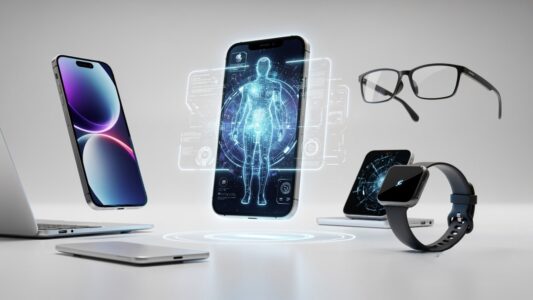 The future of consumer technology is increasingly being shaped by artificial intelligence, and Apple is positioning itself at the center of this transformation. From AI-powered iPhones and Macs to wearable devices and rumored smart glasses, Apple’s expanding AI ecosystem has become one of the most talked-about technology stories in the world. As competition intensifies with Samsung and Google, the global consumer electronics market is entering a new era where AI integration defines the next generation of personal devices.
For years, Apple has focused on building a tightly connected ecosystem of hardware, software, and services. Now, artificial intelligence is becoming the core engine powering that ecosystem. AI-driven features are being integrated across iPhones, MacBooks, iPads, Apple Watches, and other devices to improve personalization, productivity, and user interaction. Industry analysts believe Apple’s long-term strategy is to make AI invisible yet deeply embedded into everyday experiences.
One of the biggest areas of attention is Apple’s evolution of intelligent assistants and on-device AI capabilities. Consumers are increasingly expecting devices to understand context, automate tasks, summarize information, and deliver highly personalized experiences in real time. Apple is reportedly investing heavily in advanced AI assistants capable of operating more naturally across apps, voice commands, and multitasking environments.
Unlike many competitors that rely heavily on cloud-based AI systems, Apple continues emphasizing privacy-focused AI processing directly on devices. This approach allows sensitive user data to remain more secure while reducing dependence on remote servers. Privacy remains one of Apple’s strongest competitive advantages, especially as concerns around AI surveillance, data collection, and cybersecurity continue to grow worldwide.
Rumors surrounding next-generation Apple hardware are also fueling global excitement. Reports of AI-powered smart glasses, wearable computing systems, and immersive augmented reality experiences have intensified speculation about the company’s future product roadmap. Many analysts believe wearable AI devices could eventually become as transformative as smartphones, creating entirely new ways for people to interact with digital content.
The competition between Apple, Samsung, and Google is accelerating innovation across the technology industry. Each company is racing to build smarter devices powered by increasingly advanced AI systems. Samsung is integrating generative AI into smartphones and consumer electronics, while Google continues expanding AI across Android devices and cloud-based services. This rivalry is pushing companies to deliver faster processors, better battery efficiency, and more intelligent user experiences.
Artificial intelligence is also transforming how consumers use personal devices daily. AI-powered photography, live language translation, predictive text, voice interaction, health monitoring, and automated workflows are becoming standard features rather than experimental technologies. Smart devices are evolving into proactive digital companions capable of anticipating user needs and adapting in real time.
The rise of AI-integrated devices is having a major impact on global technology markets. Investors are closely monitoring companies leading the AI hardware transition, recognizing that consumer demand for intelligent devices could drive the next massive wave of growth in the technology sector. Semiconductor manufacturers, cloud infrastructure providers, and AI software developers are all benefiting from this expanding ecosystem.
At the same time, the rapid integration of AI into consumer products raises important questions about ethics, regulation, and digital dependence. Governments worldwide are discussing policies around AI transparency, data security, and responsible use of intelligent systems. Concerns over misinformation, privacy risks, and algorithmic influence are becoming central to conversations about the future of consumer technology.
Apple’s influence extends beyond hardware innovation. The company’s decisions often shape broader market trends, affecting app developers, accessory makers, digital services, and even competing technology ecosystems. As AI becomes deeply integrated into personal devices, Apple’s approach could significantly influence how consumers interact with technology for the next decade.
Experts believe the industry is moving toward a future where AI is seamlessly woven into everyday life. Smartphones, wearables, smart homes, and augmented reality systems may soon function together through unified AI-driven ecosystems capable of understanding human behavior at unprecedented levels.
In conclusion, Apple’s expanding AI ecosystem and next-generation devices represent a major turning point in consumer technology. As the competition between Apple, Samsung, and Google accelerates, the world is entering a new era of AI-powered personal devices that could fundamentally reshape communication, productivity, entertainment, and daily life. The AI revolution is no longer limited to software—it is becoming deeply embedded into the devices people carry and use every day.