

AI & Semiconductor War Intensifies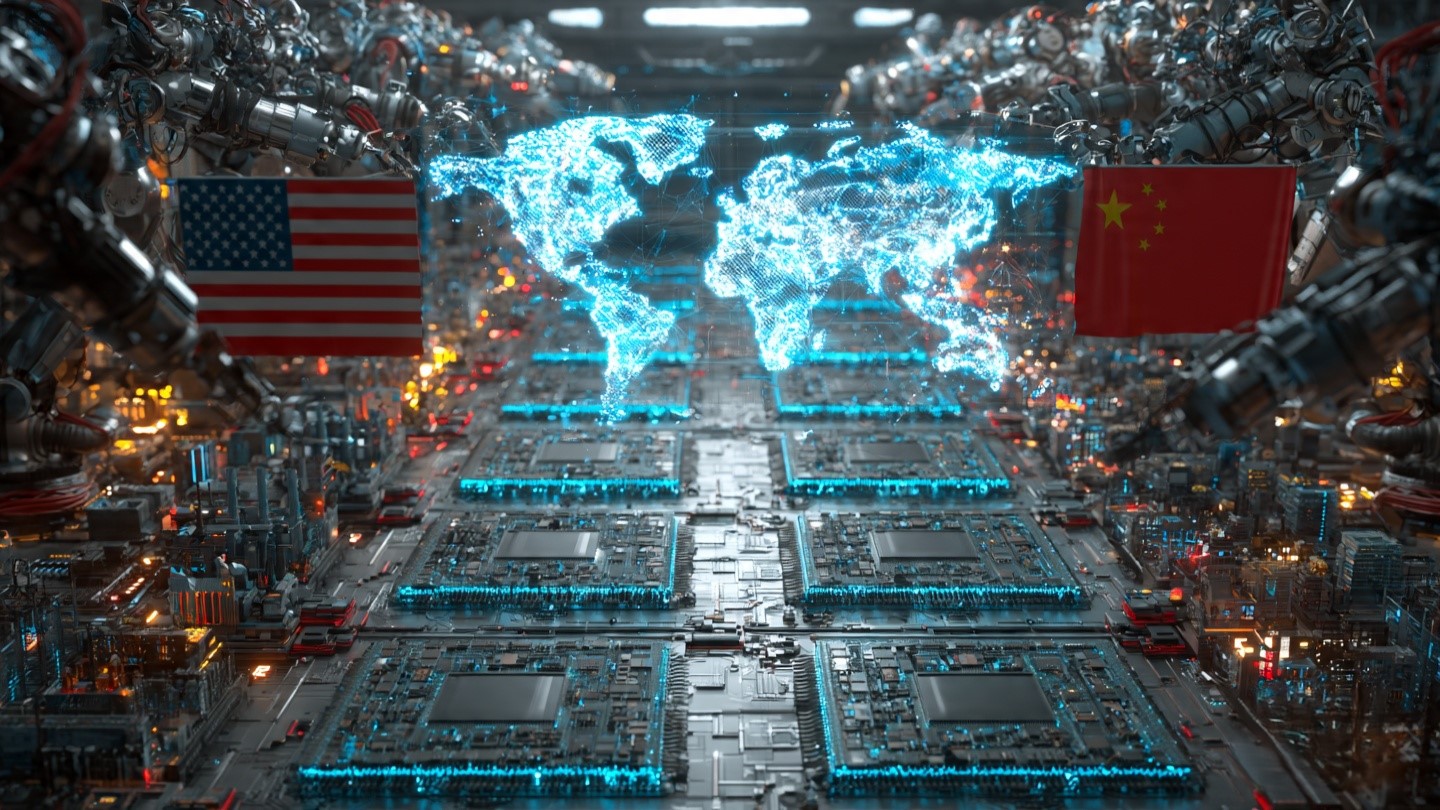 The global race for artificial intelligence dominance has evolved into one of the most important technological and geopolitical battles of the modern era. As governments and technology giants compete for leadership in AI infrastructure and semiconductor production, the world is witnessing a rapidly escalating “AI and chip war” that could shape economic power, military strategy, and global influence for decades to come.
At the center of this competition are major technology leaders such as OpenAI, Google DeepMind, and NVIDIA. These companies are driving the next generation of AI systems, while governments worldwide are investing billions into semiconductor manufacturing, cloud infrastructure, and advanced computing technology. What was once viewed as a purely commercial innovation race has now become deeply tied to national security and geopolitical strategy.
One of the biggest drivers behind the AI boom is the massive demand for advanced semiconductors. AI systems require enormous computational power, and that power depends on highly specialized chips capable of handling complex machine learning models and data processing tasks. NVIDIA has emerged as a dominant force in this market, supplying AI processors used by businesses, governments, and research institutions around the world.
The growing importance of semiconductors has intensified tensions between the United States and China. The United States has imposed restrictions on advanced chip exports and semiconductor manufacturing equipment aimed at slowing China’s progress in artificial intelligence and supercomputing. Washington argues that limiting China’s access to critical technologies is necessary to protect national security and maintain technological leadership.
China, however, has responded aggressively by accelerating domestic semiconductor production and increasing investment in AI research. Beijing is pouring billions into local chip manufacturing companies and infrastructure projects in an effort to reduce reliance on foreign technology. Chinese firms are also developing alternative supply chains and strengthening partnerships with countries willing to cooperate outside Western-led restrictions.
The AI race extends far beyond commercial competition. Artificial intelligence is increasingly connected to military technology, cybersecurity, surveillance systems, and strategic defense capabilities. Governments understand that future military and intelligence operations may depend heavily on AI-powered systems capable of processing vast amounts of data in real time. As a result, control over semiconductors and advanced computing has become a matter of national strategic importance.
Massive investments in AI infrastructure are also transforming global markets. Technology companies are building huge data centers, cloud computing networks, and energy-intensive facilities to support next-generation AI models. This infrastructure boom is driving unprecedented demand for electricity, rare earth materials, and semiconductor supply chains, creating ripple effects across industries worldwide.
Financial markets continue reacting strongly to AI-related developments. Investors view artificial intelligence as one of the most transformative technologies since the internet revolution, leading to surging valuations for chip manufacturers, cloud providers, and AI-focused firms. At the same time, analysts warn that the increasing concentration of power among a few major technology companies could create long-term economic and competitive risks.
The rivalry between AI leaders has also intensified innovation speed. OpenAI, Google DeepMind, and other firms are rapidly developing more powerful AI systems capable of generating text, images, video, coding assistance, and advanced reasoning. This competition has accelerated global adoption of AI tools across industries such as healthcare, finance, manufacturing, education, and media.
Despite the excitement, concerns surrounding AI continue to grow. Governments and researchers are debating regulation, ethics, privacy, misinformation, and job displacement caused by automation. Questions about AI safety and control have become central topics in international policy discussions, particularly as systems become more advanced and influential.
The semiconductor war is also reshaping global alliances. Countries including Japan, South Korea, India, and members of the European Union are increasing investments in domestic chip manufacturing and technology partnerships. The goal is to reduce dependence on fragile global supply chains and secure access to critical computing infrastructure.
Social media and international news coverage have amplified worldwide attention on the AI race. Every new AI breakthrough, chip announcement, or government policy instantly becomes a global conversation topic, reflecting how deeply technology is now connected to economics, politics, and global influence.
In conclusion, the AI and semiconductor war is no longer just a technology story—it is a global power struggle shaping the future of economic growth, military capability, and international leadership. As nations and corporations compete for dominance in artificial intelligence and advanced computing, the decisions made today could determine the balance of global power for generations to come.