Skip to content
 “Let Them Play”: Trump and FIFA Greenlight Iran for World Cup 2026
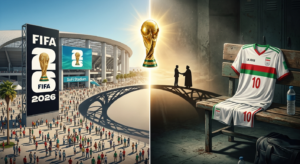
In a moment where global diplomacy and sportsmanship have become inextricably linked, U.S. President Donald Trump has issued a viral endorsement that has essentially cleared the path for the Iranian National Team to compete in the United States this summer. Breaking through a thicket of sanctions, naval blockades, and heated rhetoric, Trump’s surprisingly succinct statement—”Let them play”—has signaled a temporary “sporting ceasefire” just weeks before the tournament’s opening kickoff.
The announcement came on the heels of the 76th FIFA Congress in Vancouver, where FIFA President Gianni Infantino delivered a definitive confirmation: the expanded 48-team tournament will proceed as scheduled, with Iran maintaining its place in Group G. The “Gianni Factor”: Diplomacy via the Oval Office
The breakthrough appears to have been the result of personal lobbying by Infantino, who has long maintained a close rapport with the U.S. President. Addressing the media, Trump indicated that his pivot was largely influenced by his trust in the FIFA chief. “If Gianni said it, I’m okay. Did Gianni say it? You know what? Let them play,” Trump stated during a press briefing. “Gianni’s fantastic; he’s a friend of mine. He talked about it, and we want a great tournament.”This “blessing” comes at a critical time. Only months ago, the U.S. administration had voiced concerns regarding the “safety and appropriateness” of hosting the Iranian team amidst active geopolitical conflicts. However, the viral nature of the “Let them play” slogan has shifted the narrative from one of exclusion to one of high-stakes sports diplomacy.
Iran’s Journey to U.S. SoilFor the Iranian team, nicknamed Team Melli, the logistical hurdles have been as daunting as their Group G opponents (Belgium, New Zealand, and Egypt). Following a series of regional escalations, Tehran had initially requested that their matches be moved to neutral venues in Mexico or Canada.
FIFA, however, remained firm. Infantino’s address at the Congress emphasized the unifying power of football, stating, “Iran will play in the United States because we have to unite. It is our responsibility to bring people together.” The team is currently scheduled to play its opening match against New Zealand on June 15 at the SoFi Stadium in Los Angeles—a city home to one of the largest Iranian diaspora populations in the world—followed by a crucial fixture in Seattle.
A Tense BackdropWhile the “Let them play” sentiment has eased immediate fears of a disqualification or boycott, the atmosphere remains charged. The Iranian delegation was notably absent from the Vancouver Congress after Canadian authorities revoked their visas, citing security concerns. This administrative friction serves as a reminder that while the players may be welcome on the pitch, the political machinery surrounding them remains deeply fractured.
The World Cup as a “Pressure Valve”Historians may look back at the 2026 World Cup as a rare “pressure valve” in a decade defined by global tension. By allowing Iran to compete on American soil, the U.S. administration is making a calculated bet: that the spectacle of the “Beautiful Game” can provide a much-needed humanizing element to a relationship otherwise defined by headlines of war and economic blockades.
The Elite's Review – Global Business Magazine