The Elite's Review – Global Business Magazine

Lifestyle

Lifestyle

Borderless Medical Commerce 2026: Stablecoins and the Digital Health Workforce

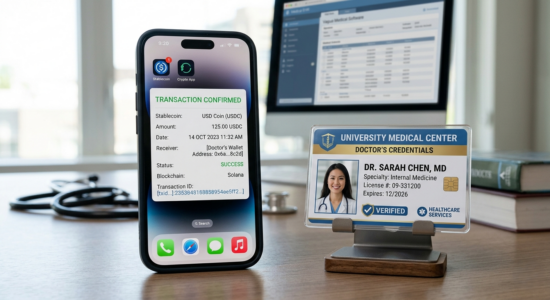
The Borderless Patient: How Stablecoins and Blockchain Rebuilt Medical Commerce In May 2026, the traditional boundaries of healthcare are dissolving. For a patient in London seeking specialized spinal surgery in India or a digital nomad in Bangkok requiring elective care, the “waiting game” of international finance is officially over. The rise of Borderless Medical Commerce has replaced sluggish wire transfers and volatile currency exchanges with the precision of programmable finance. By leveraging fiat-backed stablecoins (digital assets pegged 1:1 to the US dollar or Euro), the medical tourism industry has unlocked a level of efficiency that was unimaginable just three years ago. The Death of the 3-Day Wire Transfer Historically, medical tourism faced a significant “friction” problem. High-cost surgeries often required large deposits, which were frequently delayed by intermediary banks and cross-border compliance checks. In 2026, this hurdle has been removed. Using smart contracts, patients can now deposit funds into a digital escrow. These funds are only released to the hospital upon “verifiable triggers”—such as the patient’s arrival at the facility or the successful completion of a procedure. This “Trustless Transaction” model protects both the patient’s capital and the hospital’s revenue, ensuring that liquidity is instant and 24/7/365. Programmable Finance Meets Patient Care The innovation doesn’t stop at simple payments. The “programmable” nature of these 2026 financial tools allows for automated insurance reimbursements. Leading international insurers are now using stablecoin-based tools to settle claims in near real-time. Instead of months of paperwork, the hospital’s billing system communicates directly with the insurer’s blockchain ledger. When treatment data matches coverage rules, the payment is triggered immediately. This slashes administrative overhead and allows hospitals to offer lower, more transparent pricing to international travelers. Verifiable Credentials: The New Global Standard As finance becomes borderless, so must the workforce. The 2026 trend has forced a critical conversation regarding Verifiable Credentials (VCs). In a decentralized, digital workforce where a patient might consult a specialist via telehealth in Brazil before flying to Mexico for surgery, how do you verify the doctor’s expertise? Enter the Decentralized Identifier (DID). Surgeons and clinicians in 2026 now carry tamper-proof digital files—standardized in formats like JSON-LD—that contain their medical degrees, board certifications, and surgical success rates. Instant Verification: Hospitals can verify a foreign doctor’s credentials in seconds without making international phone calls. Clinician Mobility: These credentials allow for a more mobile health workforce, where expertise can be “exported” digitally without the friction of legacy bureaucracy. “We are no longer bounded by the currency in our wallets or the physical certificates on our walls,” says a director at a major Singaporean health hub. “Healthcare in 2026 is anchored in verifiability and programmability.” The Challenges of Decentralized Health Despite the surge in adoption, the shift has sparked intense debate among regulators. Central banks are closely monitoring “unhosted” wallets used for medical payments, and medical boards are wrestling with how to revoke a “verifiable credential” if a doctor commits malpractice across borders. Furthermore, while stablecoins provide a hedge against inflation for patients in volatile economies, the reliance on digital infrastructure leaves systems vulnerable to specialized cyber threats. Conclusion The rise of borderless medical commerce in 2026 is more than just a technological upgrade; it is a fundamental redesign of the patient experience. By merging the speed of stablecoins with the security of verifiable digital identities, the world is moving toward a unified global health market. As we look toward the second half of the decade, the “lone hospital” is being replaced by a globally interoperable infrastructure where care is defined by skill and code, not geography and paper.

Lifestyle

DDW 2026: The End of the Endoscopy? New Cancer Blood Tests Revealed

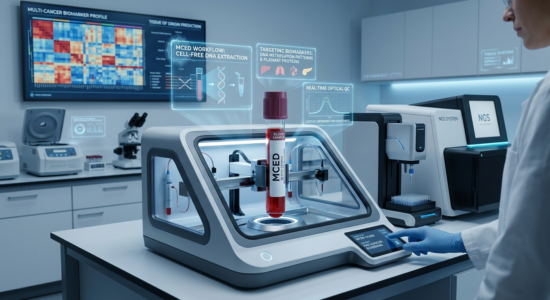
The Liquid Biopsy Revolution: Redefining Cancer Detection at DDW 2026 For decades, the gold standard for detecting gastrointestinal (GI) cancers has been the invasive procedure. Whether it is a colonoscopy for colorectal cancer or an endoscopy for esophageal issues, the barrier to entry has always been high: prep work, anesthesia, and recovery time. At the Digestive Disease Week (DDW) 2026 conference, the conversation has officially shifted. New data presented by industry leaders, including Abbott, suggests that a single blood draw or a refined stool sample can now detect early-stage malignancies across multiple organs with a level of accuracy that rivals—and in some cases, surpasses—traditional methods. Multi-Target Detection: One Test, Three Cancers The “star of the show” this year is the multi-target liquid biopsy. Unlike previous generations of tests that looked for a single marker, these 2026 iterations utilize advanced genomic sequencing to identify circulating tumor DNA (ctDNA) and specific protein biomarkers. The clinical data presented this week confirms that these tests can accurately flag: Colorectal Cancer (CRC): Detecting precancerous polyps with over 90% sensitivity. Liver Cancer: Identifying early hepatocellular carcinoma in high-risk patients. Esophageal Cancer: Picking up the “silent” markers of Barrett’s esophagus before it turns malignant. Reducing the Hospital Burden The trending debate at DDW 2026 isn’t just about the science; it’s about the economics of care. Hospital systems in 2026 are under unprecedented strain. By utilizing these multi-target tests as a primary screening tool, doctors can “triage” the population. In this new model, an endoscopy is no longer the first step for everyone. Instead, it becomes a secondary, confirmatory tool used only for those who test positive on a blood or stool screen. Early estimates suggest this could reduce the demand for initial screening endoscopies by as much as 40%, freeing up specialist time for complex surgeries and therapeutic interventions. The Abbott “Guardant” Breakthrough Abbott’s latest results have been particularly disruptive. Their new platform integrates AI-driven analysis to filter out “genomic noise”—the false positives that often plague early-stage cancer tests. By focusing on methylation patterns (the “dimmer switches” of our DNA), the test can pinpoint exactly where in the digestive tract the cancer is located, allowing surgeons to go directly to the source if a procedure is eventually required. “We are moving from a reactive model of ‘find and treat’ to a proactive model of ‘screen and prevent,’” said one lead researcher at the conference. “The patient doesn’t have to fear the procedure; they just have to trust the vial.” The Challenges Ahead: Access and AI While the excitement is palpable, the DDW panels also addressed the hurdles. Insurance coverage remains a significant barrier for these high-tech “multi-cancer early detection” (MCED) tests. Furthermore, there is the ethical question of “over-diagnosis”—detecting tiny abnormalities that may never have caused the patient harm, potentially leading to unnecessary anxiety. However, with the integration of real-time AI analysis, the 2026 models are significantly better at distinguishing between aggressive tumors and indolent ones, a leap forward from the “all-or-nothing” tests of five years ago. Conclusion The breakthroughs at DDW 2026 represent a pivot point in human history. We are entering an era where the most feared cancers of the digestive system can be spotted from a simple clinic visit. As these non-invasive tools become the new standard of care, the “fear factor” of cancer screening is evaporating. For millions of patients, the future of health isn’t found in a hospital gown—it’s found in a blood draw.

Lifestyle

The 2026 Measles Tipping Point: Cases Surge as Global Immunity Falters

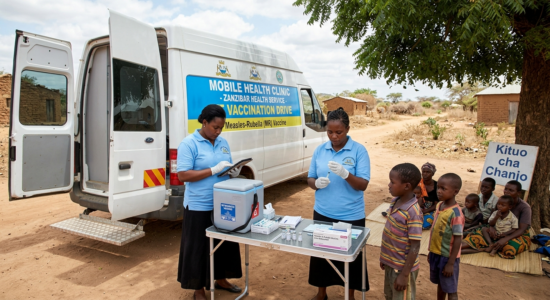
The 2026 Measles Resurgence: Navigating the Global Tipping Point As of early May 2026, health agencies are sounding a global alarm. The Centers for Disease Control and Prevention (CDC) has officially confirmed that measles cases in the United States have crossed the 1,800 mark for the year—a staggering figure considering the disease was once declared eliminated in the U.S. in 2000. But the crisis isn’t confined to American borders. From the crowded settlements of Bangladesh to the urban centers of Europe, the world has reached what experts call a “tipping point.” A disease that is almost entirely preventable is back, fueled by years of stagnated vaccination coverage and a relentless tide of misinformation. The Numbers Behind the SurgeThe data for 2026 paints a troubling picture of vulnerability. In the U.S., the majority of cases are concentrated among the unvaccinated, with significant outbreaks reported in Utah, Arizona, and Florida. Globally, the situation is even more critical. Bangladesh has seen suspected cases climb toward 35,000, while parts of Africa and Europe are reporting 30-year highs in transmission rates. The common thread? A failure to maintain the 95% vaccination threshold required for “herd immunity.” When coverage drops even slightly below this mark, measles—one of the most contagious viruses known to science—finds the gaps with surgical precision. Why 2026? The Convergence of Three FactorsHealth experts point to a “perfect storm” that led to the current resurgence:The “Pandemic Hangover”: Routine immunization schedules disrupted during the early 2020s never fully recovered in many regions, leaving a “catch-up” generation of children unprotected.The Misinformation Epidemic: A surge in vaccine hesitancy, often driven by social media echo chambers, has turned medical choice into a political statement, leading many parents to delay or skip the MMR (Measles, Mumps, and Rubella) vaccine. Geopolitical Instability: Conflicts and migrations in 2025 and 2026 have uprooted millions, making it difficult for health systems to track and vaccinate mobile populations.The “Last-Mile” Solution: Mobile ClinicsIn response, the WHO and UNICEF have shifted their strategy toward “last-mile” delivery. Recognizing that traditional hospital-based vaccination is failing at-risk communities, health agencies are deploying fleets of mobile vaccination clinics. These “clinics on wheels” travel to rural villages, urban slums, and transit hubs to provide immediate, barrier-free access to the MR vaccine. In sub-Saharan Africa, these mobile units are often the only defense against rapidly spreading community outbreaks. Similarly, in the U.S. and Europe, “pop-up” clinics are being stationed at community centers to counteract the inconvenience and distrust associated with traditional medical settings.”Measles is the ‘canary in the coal mine’ for our health systems,” says a senior WHO epidemiologist. “It tells us exactly where our primary care is failing. If we can’t stop measles, we aren’t ready for the next pandemic.”Travel Advisories and Personal RiskThe resurgence has prompted a wave of new travel advisories. Travelers are now urged to confirm their vaccination status at least two weeks before international transit. For infants as young as six months who are traveling to outbreak “hot zones,” the CDC is now recommending an early dose of the vaccine to provide baseline protection.ConclusionThe 2026 measles resurgence is a wake-up call. It proves that public health is not a static achievement but a continuous effort. To reclaim the 2030 goal of global elimination, the focus must shift from high-level statistics to local trust. By closing the “last-mile” gap and addressing misinformation with transparent, community-led science, we can push the virus back into the history books. Until then, the “tipping point” of 2026 remains a sobering reminder of what happens when we take our collective immunity for granted.

Lifestyle

AI Wingmen and the New Malpractice: Is Not Using AI Now a Liability?

The Rise of the AI Wingman: When ‘Ambient Intelligence’ Becomes the Standard of Care In the opening months of 2026, the local sounds of a hospital—the rhythmic beep of monitors and the hurried footsteps in the hall—have been joined by a silent partner: Ambient Clinical Intelligence (ACI). Often referred to by doctors as “AI Wingmen,” these agentic systems are no longer just experimental pilots. They are officially sitting in on thousands of doctor-patient conversations, transcribing notes in real-time, and, increasingly, flagging diagnostic red flags that the human eye might miss. But as adoption surges, a provocative question is haunting medical boards and legal chambers: If an AI can diagnose better than a doctor, is it malpractice for a doctor to work without one?From Scribes to StrategistsThe first wave of AI in clinics focused on the “paperwork pandemic.” By late 2025, AI agents had successfully reduced the administrative burden on physicians by up to 50%, allowing doctors to look patients in the eye rather than at a keyboard. However, the “2026 Pivot” has seen these agents evolve. Today’s AI wingmen use natural language processing (NLP) to analyze the nuance of a patient’s tone, cross-reference symptoms with global databases in seconds, and suggest differential diagnoses in real-time. The Malpractice ParadoxThe “hot-button” issue of 2026 is clinical liability. Historically, malpractice occurred when a doctor deviated from the “accepted standard of care.” As data emerges showing that AI-supported diagnostics carry a significantly lower error rate in specific fields—such as oncology and cardiology—the definition of that “standard” is shifting. The Pro-AI Argument: Some legal scholars argue that if a tool exists that demonstrably reduces diagnostic errors, a physician’s failure to utilize that tool constitutes a breach of duty to the patient.The Autonomy Argument: Conversely, medical traditionalists argue that AI remains a “black box.” If a doctor follows an AI’s incorrect suggestion, they are liable. If they ignore a correct AI suggestion, they are also liable. This creates a “double-bind” where the physician’s judgment is effectively sidelined by the fear of litigation. Medical Boards Under PressureState medical boards are currently divided. In early 2026, several high-profile cases have reached discovery where plaintiffs’ attorneys argued that a missed diagnosis would have been caught had the hospital implemented the latest ACI “wingman” software.”We are entering an era where ‘human-only’ medicine may be viewed as unnecessarily risky,” says Sarah Chen, a healthcare litigator specializing in AI ethics. “Just as we would question a surgeon today who refused to use an X-ray, we may soon question a GP who refuses to use a diagnostic AI.”The “Human-in-the-Loop” SafeguardTo combat this, the 2026 AI Reset policies have emphasized a “Human-in-the-Loop” requirement. For a hospital to remain insured, a licensed professional must still “attest” to every AI-generated note or diagnosis. The AI is a co-pilot, but the human is the captain.Yet, the line between “assisting” and “directing” is blurring. When an AI agent surfaces a rare genetic condition based on a 10-minute conversation, the doctor is often merely confirming the machine’s brilliance.ConclusionAs we navigate the remainder of 2026, the presence of AI wingmen in the exam room will only grow. The debate over liability isn’t just about who gets sued when things go wrong; it’s about a fundamental shift in the medical profession. We are witnessing the birth of a new standard of care—one where the most “accurate” doctor is the one who knows how to best collaborate with their digital partner.The era of the “lone wolf” physician is ending. In its place is a high-tech partnership that promises fewer errors, but demands a total rewrite of our legal and ethical playbooks.

Lifestyle

WHO Global Hepatitis Report 2026: Closing the “Lethal Gap” to 2030

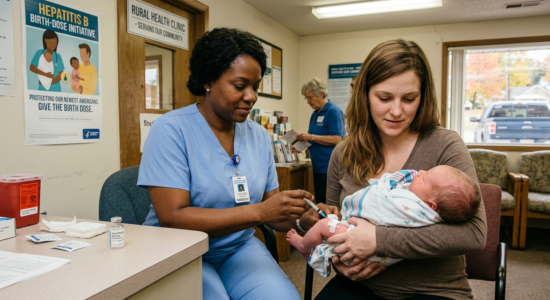
The Lethal Gap: Can We Still Eliminate Hepatitis by 2030? The World Health Organization (WHO) recently released its Global Hepatitis Report 2026, and the findings have ignited a fierce debate among global health experts. Published on April 28, the report presents a paradoxical reality: while the world has made historic strides in preventing new infections, the death toll remains staggeringly high, exposing a “lethal gap” that threatens the 2030 goal of total elimination. Progress vs. Persistence: The 32% Milestone On the surface, the data offers a reason for cautious optimism. Since 2015, new Hepatitis B (HBV) infections have plummeted by 32%. This decline is largely credited to the success of childhood immunization programs that have protected a generation from the chronic liver disease that often follows infection. However, this progress is shadowed by a grim statistic: 1.3 million people still die every year from Hepatitis B and C. These deaths are not the result of a lack of medical tools, but a failure of delivery. We are effectively witnessing a “silent pandemic” where those already infected—many of whom are unaware of their status—are being left behind. The “African Birth-Dose Gap” The most contentious part of the 2026 report focuses on what experts are calling the “African birth-dose gap.” While global vaccination averages look promising, the WHO African Region tells a different story. Currently, only 17% of newborns in Africa receive the critical Hepatitis B “birth-dose” vaccine—the shot given within 24 hours of birth to prevent mother-to-child transmission. In many sub-Saharan countries, the infrastructure to reach infants in that vital first day simply isn’t there. Without closing this gap, the WHO warns that we will continue to see hundreds of thousands of preventable chronic cases every decade. “Eliminating hepatitis is not a pipedream,” stated WHO Director-General Dr. Tedros Adhanom Ghebreyesus upon the report’s release. “But the tools must reach the people. A vaccine sitting in a warehouse is not a vaccine; it is a missed opportunity.” The Disparity in Treatment The report also highlights a massive disconnect in treatment access. For Hepatitis C (HCV), we now have direct-acting antivirals that can cure the disease in over 95% of cases. Yet, despite the drop in drug prices, only 20% of people eligible for HCV treatment have actually received it since 2015. For Hepatitis B, the situation is even more dire. Less than 5% of the 240 million people living with chronic HBV are currently receiving life-saving antiviral therapy. Most of these individuals live in just 10 countries, which account for nearly 70% of the global burden. The Road to 2030: A Call for Action The 2026 report serves as a “red alert” for the international community. To meet the 2030 elimination targets, the WHO suggests five priority actions: Universal Birth-Dose: Rapidly scaling up the 24-hour HBV vaccine in Africa. Decentralized Testing: Moving diagnosis from high-end hospitals to local primary care clinics. Price Equity: Ensuring that low-income nations have access to the same cure rates as the West. Prevention of Mother-to-Child Transmission: Providing antivirals to pregnant women to lower viral loads. Harm Reduction: Strengthening safe injection practices to curb Hepatitis C spread among vulnerable populations. Conclusion The Global Hepatitis Report 2026 makes it clear: we have the science, but we lack the equity. The “lethal gap” is not a medical mystery; it is a logistical and political challenge. As the 2030 deadline looms just four years away, the debate has shifted from how to save lives to who we are willing to save. If the world can close the African birth-dose gap and modernize treatment delivery, the goal of a hepatitis-free world remains within reach. If not, the 1.3 million annual deaths will remain a tragic constant in an era of otherwise miraculous medicine.

Lifestyle

Human History Redefined: Ancient Engineering, JP Morgan Scandal, and Nuclear Milestones

From Ancient Wood to Nuclear Fire: A Week of Human Evolution and Corporate Reckoning The first week of May 2026 has delivered a dizzying trifecta of news that spans the entirety of the human timeline. While archaeologists in Africa are rewriting the history of our prehistoric ancestors, modern corporate corridors are being rocked by a viral scandal, and South Asia is leaping into a new era of high-tech energy independence. It is a moment where the primitive, the political, and the powerful have converged. Engineering Before Homo Sapiens: The Kalambo Falls Discovery For decades, the narrative of human evolution suggested that early man was a nomad, wandering the plains with nothing but stone tools and temporary shelters. That narrative has just been dismantled. Archaeologists working at Kalambo Falls have confirmed the existence of a wooden structure dating back an astounding 476,000 years. This find predates the emergence of Homo sapiens by over 100,000 years. The structure—two interlocking logs joined by a notch—was preserved in the waterlogged banks of the falls. This isn’t just a fallen tree; it is evidence of deliberate, sophisticated engineering. It suggests that our ancestors, likely Homo heidelbergensis, were settled builders who understood how to manipulate wood to create permanent dwellings or platforms. “We are looking at the birth of the built environment,” says one lead researcher. “This discovery forces us to rethink the cognitive abilities of early humans. They weren’t just surviving; they were designing.” The “Viral Resignation”: JP Morgan’s Corporate Crisis While science looks back at our origins, social media is hyper-focused on the toxicity of the modern workplace. JP Morgan is currently at the center of a firestorm following a sexual harassment scandal involving a high-ranking executive. The scandal went global not just because of the allegations, but because of a “viral” LinkedIn response from a junior associate. Rather than quietly exiting, the employee posted a scorched-earth rebuttal to the executive’s private attempts to “settle” the matter. Within hours, the post garnered millions of interactions, sparking a fierce debate on corporate accountability and the “culture of silence” that often protects high-earners. The incident has triggered a PR nightmare for the banking giant, with #JPMCulture trending worldwide. It serves as a stark reminder that in 2026, the traditional corporate “hush money” playbook is no match for a digital generation that prizes transparency over career security. South Asia’s Nuclear Dawn: Bangladesh Makes History In a milestone for global energy, Bangladesh has officially begun fuel loading for its first-ever nuclear power plant. The Rooppur Nuclear Power Plant represents a massive shift toward energy independence for the nation and the broader South Asian region. The loading of the uranium fuel rods marks the final transition from a construction project to a live power facility. Once fully operational, the plant is expected to provide a stable, low-carbon backbone for Bangladesh’s rapidly growing economy. For a region often plagued by power shortages and a heavy reliance on fossil fuels, the “N-Power” milestone is seen as a crucial step in meeting climate goals without sacrificing industrial growth. The Common Thread Whether it is the notched logs of Kalambo Falls or the uranium rods in Bangladesh, the human story remains one of mastering our environment. However, as the JP Morgan scandal illustrates, our technological and engineering prowess often outpaces our social evolution. We can build nuclear reactors and prehistoric homes, but we are still navigating the complexities of how we treat one another within the structures we create.

error: Content is protected !!
Scroll to Top