 Skip to content
China’s Expanding Global Influence
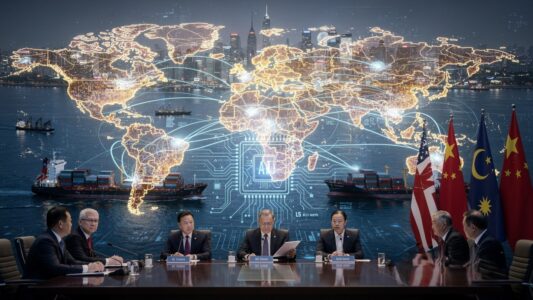 China’s growing role in global diplomacy is becoming one of the defining geopolitical stories of 2026. From the Middle East to global trade negotiations, China is increasingly positioning itself as a diplomatic mediator and strategic power capable of challenging long-standing U.S. influence. Its involvement in issues surrounding Iran, energy security, and international trade has intensified global attention, particularly as tensions rise between Washington and Beijing over sanctions, technology, and geopolitical alignment.
At the center of this growing influence is China’s role in Middle Eastern diplomacy. Beijing has actively engaged in discussions involving Iran and regional stability, presenting itself as a neutral actor focused on dialogue and economic cooperation rather than military intervention. Chinese officials have supported diplomatic efforts aimed at easing tensions surrounding the Strait of Hormuz and broader regional conflicts. Analysts view this approach as part of China’s long-term strategy to establish itself as a credible global mediator.
China’s relationship with Iran remains a major source of geopolitical friction with the United States. Beijing continues to resist U.S.-led sanctions targeting Iranian oil exports and technology access, emphasizing economic cooperation and strategic independence. Reports suggest China remains one of Iran’s most important economic partners, particularly in the energy sector, where discounted oil imports help sustain Tehran’s economy despite international pressure.
This resistance to sanctions highlights a broader shift in global power dynamics. China is increasingly promoting alternatives to Western-led financial systems and trade structures, strengthening ties with BRICS nations and regional partners across Asia, Africa, and the Middle East. By expanding economic networks outside traditional Western influence, Beijing is reinforcing its vision of a more multipolar global order.
Technology is another major battleground in the U.S.–China rivalry. Washington has imposed restrictions on advanced semiconductor exports and AI-related technologies, aiming to limit China’s progress in critical sectors. In response, China has accelerated investment in domestic chip production, artificial intelligence, and advanced manufacturing. The competition over technology has become deeply intertwined with national security, economic power, and future geopolitical influence.
The growing influence of China is also visible in international institutions and diplomatic negotiations. At the United Nations, Beijing has increasingly opposed resolutions backed by the United States, especially those connected to Iran and military intervention. China, alongside Russia, is expected to resist stronger UN actions targeting Iran, reflecting a coordinated effort to counterbalance Western pressure.
Economically, China’s global expansion continues through infrastructure investments, trade partnerships, and supply chain dominance. Projects linked to the Belt and Road Initiative have strengthened China’s influence in developing economies, while its control over critical materials such as rare earth minerals and manufacturing capacity gives Beijing additional leverage in global trade disputes.
At the same time, China is carefully managing its global image. Rather than engaging in direct military alliances similar to the United States, Beijing often emphasizes diplomacy, economic incentives, and strategic partnerships. Experts argue that this flexible approach allows China to maintain relationships with competing regional powers while avoiding costly military entanglements.
However, China’s expanding influence also raises concerns among Western governments and analysts. Critics argue that Beijing’s growing economic and technological reach could weaken Western dominance in finance, trade, and global governance. Others worry about increased geopolitical fragmentation as countries align themselves between competing power blocs.
Public interest in China’s global role has surged across financial markets, diplomatic circles, and social media. The combination of trade wars, AI competition, energy diplomacy, and geopolitical negotiations has turned China into one of the most closely watched powers in the modern world.
In conclusion, China’s expanding global influence represents a major transformation in international relations. By combining diplomacy, economic power, and technological ambition, Beijing is steadily reshaping the global balance of power. As tensions with the United States continue to evolve, the world is entering a new era where China’s decisions could increasingly shape global trade, diplomacy, and the future international order.


