Skip to content
Trump–Xi Summit & U.S.–China Power Struggle
 The world’s attention is turning toward Beijing as Donald Trump and Xi Jinping are expected to meet next week in what analysts are calling one of the most consequential geopolitical summits of 2026. The highly anticipated meeting comes at a time of rising tensions between the United States and China, with critical discussions expected around trade disputes, artificial intelligence, semiconductor restrictions, Taiwan, and Iran diplomacy.
The summit represents more than just a diplomatic event—it is a strategic confrontation between the world’s two largest economies and competing global powers. As both nations continue to expand their influence across technology, trade, and military strategy, the outcome of this meeting could significantly shape the future global order.
One of the most pressing issues on the agenda is the ongoing trade conflict between Washington and Beijing. Over recent years, tariffs, export controls, and supply chain disruptions have intensified economic friction between the two countries. The United States has continued efforts to reduce reliance on Chinese manufacturing while restricting advanced technology exports to China. In response, China has accelerated domestic innovation and strengthened alternative trade partnerships across Asia, the Middle East, and BRICS-aligned economies.
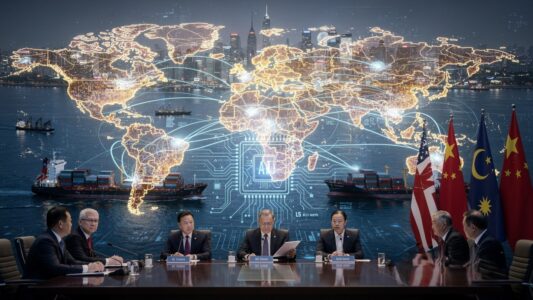
Artificial intelligence and semiconductor technology are expected to dominate the summit discussions. AI has become a defining factor in economic and military competitiveness, with both countries racing to secure leadership in next-generation technologies. The United States has imposed restrictions targeting advanced semiconductor exports and chip-making equipment, aiming to limit China’s access to critical AI infrastructure. Meanwhile, China is investing billions into its domestic semiconductor industry to reduce dependence on foreign suppliers.
The issue of Taiwan remains another major source of tension. The United States continues to maintain strategic ties and defense support for Taiwan, while China views the island as part of its sovereign territory. Military activities in the region and growing rhetoric from both sides have raised global concerns about stability in the Indo-Pacific. Analysts believe that any diplomatic breakthrough—or escalation—during the summit could have far-reaching consequences for regional and global security.
Iran diplomacy is also expected to play a central role in discussions. China has increasingly positioned itself as a mediator in Middle Eastern affairs while maintaining strong economic ties with Iran. The United States, meanwhile, remains focused on limiting Iran’s regional influence and securing global energy routes. Cooperation or disagreement between Washington and Beijing on Iran could influence oil markets, sanctions policies, and broader geopolitical alliances.
Financial markets and global businesses are closely monitoring the summit, recognizing its potential impact on international trade and investment flows. Investors understand that U.S.–China relations influence nearly every major economic sector, from technology and manufacturing to energy and logistics. Any signs of improved cooperation could boost market confidence, while renewed tensions may trigger volatility across global markets.
The summit also reflects a deeper ideological and strategic competition. The United States and China are increasingly promoting different visions of global leadership, governance, and technological development. This rivalry is shaping alliances worldwide, forcing many countries to balance relationships with both superpowers.
Despite growing competition, there remains strong pressure for diplomacy. Economists and international organizations warn that prolonged confrontation between the two nations could slow global growth, disrupt supply chains, and increase geopolitical instability. As a result, expectations are high for both leaders to seek areas of compromise while protecting their strategic interests.
Public attention surrounding the summit has intensified across social media and international news platforms. Every statement, diplomatic signal, and policy announcement is being analyzed for clues about the future direction of global power dynamics.
In conclusion, the upcoming Trump–Xi summit is more than a meeting between two leaders—it is a defining geopolitical moment. From trade and technology to security and diplomacy, the discussions in Beijing could reshape international relations and determine the balance of power for years to come. As the world watches closely, the summit may either ease tensions between the two superpowers or deepen one of the most important rivalries of the modern era.