Skip to content
The Refusal: Why the West is Standing Still on May 2

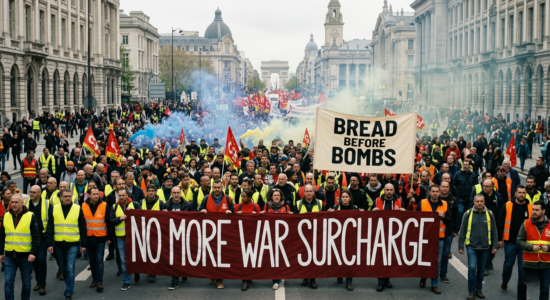
The silence in major financial hubs like New York, London, and Berlin is deafening. For the second consecutive day, the “No School, No Work, No Shopping” directive issued by a coalition of international trade unions and grassroots activists has seen a record-breaking participation rate.
The movement is driven by a singular, potent message: the working class refuses to fund or suffer for a regional war that is draining domestic treasuries and emptying consumer bank accounts.
The “Price of War” at the Pump
The catalyst for this unprecedented walkout is the direct link between the US-Iran standoff and the domestic cost of living. With Brent Crude hovering near $126 a barrel, the average price of gasoline in the U.S. has surged past $6.50 per gallon in several states, while European electricity bills are projected to rise by another 40% by summer.
“We are being told there is no money for housing, no money for healthcare, and no money for education,” said a representative for the Unified Trades Alliance during a rally in Washington D.C. “Yet, there is an endless supply of capital for aircraft carriers and blockades. We refuse to pay the price for war while our families freeze in the winter and starve in the spring.”
The School and Retail Shutdown
Unlike previous labor movements, the 2026 Blackout has successfully integrated the education and retail sectors.
Education: Over 400 university campuses across the West have remained closed, with students and faculty pivoting from academic lectures to “teach-ins” regarding the humanitarian crisis in Gaza and the economic impact of the Strait of Hormuz blockade.
Retail: The “No Shopping” pledge has hit e-commerce giants and brick-and-mortar retailers alike. Preliminary data suggests a 65% drop in consumer spending across the UK and France over the last 48 hours, as protesters aim to “starve the machine” that funds military expansion.
Government Response and the Ceasefire Demand
The political pressure is mounting. Protesters are demanding an immediate and permanent ceasefire in the Middle East, along with an “Emergency Energy Subsidy” funded by windfall taxes on defense contractors and oil majors.
While some government officials have branded the strikes as “economically reckless,” the sheer scale of the disruption—including the grounding of regional flights and the halting of public transit in major cities—has forced a change in tone. Several European parliaments are reportedly convening emergency sessions today to discuss a “peace-for-stability” fiscal package, though the White House remains steadfast in its current military posture.
The Global Solidarity Network
Social media has played a pivotal role in maintaining the momentum. Using the hashtag #MayDayBlackout2026, organizers are coordinating “mutual aid” networks to provide food and childcare for striking workers. This digital infrastructure has allowed the movement to bypass traditional media narratives, creating a global sense of solidarity that transcends national borders.
Conclusion
The May Day Blackouts of 2026 represent a fundamental shift in civil disobedience. It is no longer just about wages or hours; it is a holistic demand for a “Peace Economy.” As the sun sets on day two of the shutdown, the global markets are watching with bated breath. If the workers don’t return by Monday, the economic damage could rival the Great Recession, forcing world leaders to choose between military dominance and domestic stability.
The world has stood still for 48 hours. The question now is: who will blink first?