The Liquid Biopsy Revolution: Redefining Cancer Detection at DDW 2026
For decades, the gold standard for detecting gastrointestinal (GI) cancers has been the invasive procedure. Whether it is a colonoscopy for colorectal cancer or an endoscopy for esophageal issues, the barrier to entry has always been high: prep work, anesthesia, and recovery time.
At the Digestive Disease Week (DDW) 2026 conference, the conversation has officially shifted. New data presented by industry leaders, including Abbott, suggests that a single blood draw or a refined stool sample can now detect early-stage malignancies across multiple organs with a level of accuracy that rivals—and in some cases, surpasses—traditional methods.
Multi-Target Detection: One Test, Three Cancers
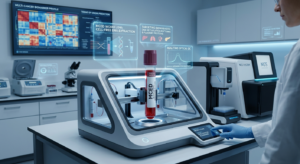
The “star of the show” this year is the multi-target liquid biopsy. Unlike previous generations of tests that looked for a single marker, these 2026 iterations utilize advanced genomic sequencing to identify circulating tumor DNA (ctDNA) and specific protein biomarkers.
The clinical data presented this week confirms that these tests can accurately flag:
Colorectal Cancer (CRC): Detecting precancerous polyps with over 90% sensitivity.
Liver Cancer: Identifying early hepatocellular carcinoma in high-risk patients.
Esophageal Cancer: Picking up the “silent” markers of Barrett’s esophagus before it turns malignant.
Reducing the Hospital Burden
The trending debate at DDW 2026 isn’t just about the science; it’s about the economics of care. Hospital systems in 2026 are under unprecedented strain. By utilizing these multi-target tests as a primary screening tool, doctors can “triage” the population.
In this new model, an endoscopy is no longer the first step for everyone. Instead, it becomes a secondary, confirmatory tool used only for those who test positive on a blood or stool screen. Early estimates suggest this could reduce the demand for initial screening endoscopies by as much as 40%, freeing up specialist time for complex surgeries and therapeutic interventions.
The Abbott “Guardant” Breakthrough
Abbott’s latest results have been particularly disruptive. Their new platform integrates AI-driven analysis to filter out “genomic noise”—the false positives that often plague early-stage cancer tests. By focusing on methylation patterns (the “dimmer switches” of our DNA), the test can pinpoint exactly where in the digestive tract the cancer is located, allowing surgeons to go directly to the source if a procedure is eventually required.
“We are moving from a reactive model of ‘find and treat’ to a proactive model of ‘screen and prevent,'” said one lead researcher at the conference. “The patient doesn’t have to fear the procedure; they just have to trust the vial.”
The Challenges Ahead: Access and AI
While the excitement is palpable, the DDW panels also addressed the hurdles. Insurance coverage remains a significant barrier for these high-tech “multi-cancer early detection” (MCED) tests. Furthermore, there is the ethical question of “over-diagnosis”—detecting tiny abnormalities that may never have caused the patient harm, potentially leading to unnecessary anxiety.
However, with the integration of real-time AI analysis, the 2026 models are significantly better at distinguishing between aggressive tumors and indolent ones, a leap forward from the “all-or-nothing” tests of five years ago.
Conclusion
The breakthroughs at DDW 2026 represent a pivot point in human history. We are entering an era where the most feared cancers of the digestive system can be spotted from a simple clinic visit. As these non-invasive tools become the new standard of care, the “fear factor” of cancer screening is evaporating. For millions of patients, the future of health isn’t found in a hospital gown—it’s found in a blood draw.