Skip to content
Venezuela Earthquake Disaster: Rescue Efforts Intensify as Humanitarian Response Expands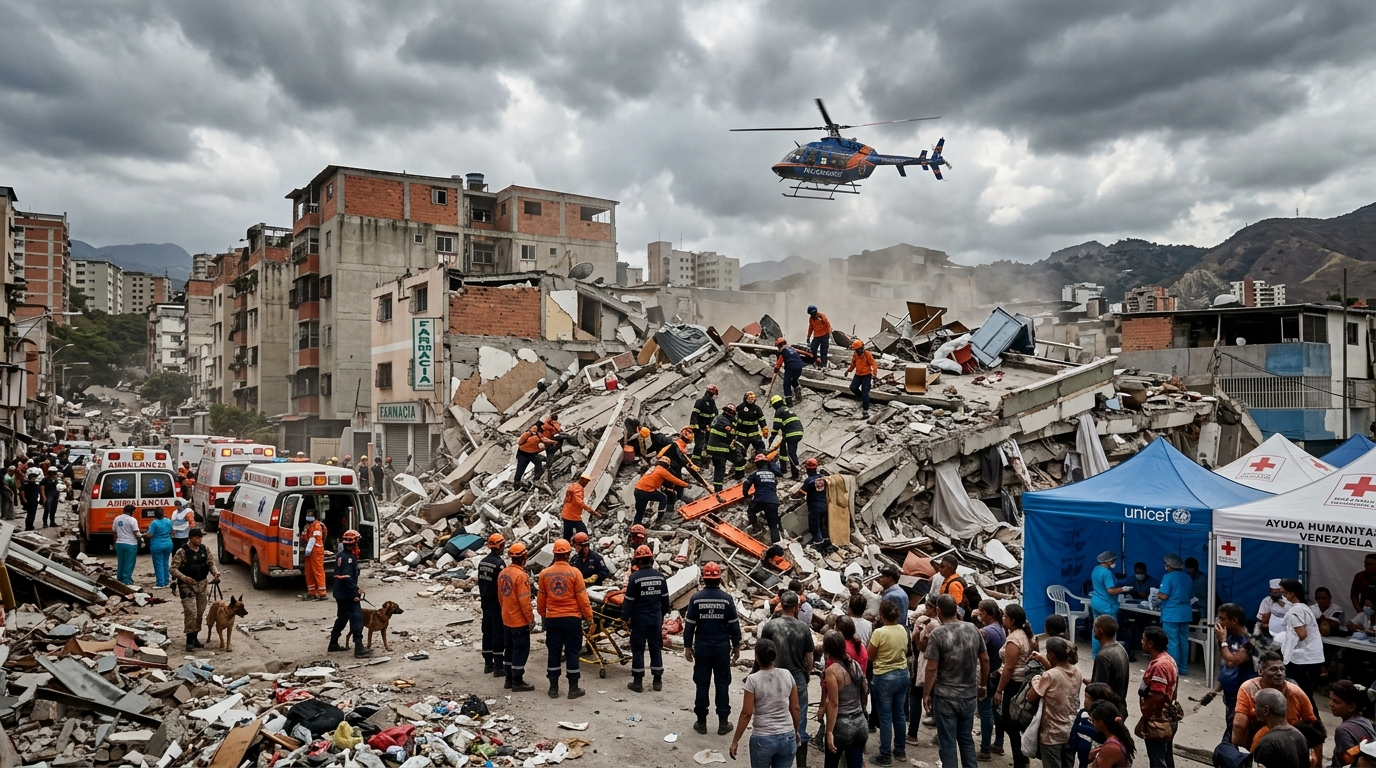
A powerful earthquake has placed Venezuela at the center of international attention, triggering widespread destruction, emergency response efforts, and a growing humanitarian operation. Rescue teams continue searching affected areas while governments, relief organizations, and international partners work together to provide assistance to communities impacted by the disaster.
The earthquake has damaged homes, public infrastructure, transportation networks, and essential services in several regions. Emergency responders have been working around the clock to reach affected communities, assess structural damage, and provide life-saving support to those in need.
As rescue operations continue, the disaster has become one of the most significant humanitarian stories of the year.
Emergency Response Mobilized
Within hours of the earthquake, national emergency agencies launched search-and-rescue operations across affected areas. Specialized rescue teams, firefighters, medical personnel, and volunteers were deployed to locate survivors, provide first aid, and secure damaged buildings.
Heavy equipment has been used to clear debris while helicopters and emergency vehicles transport injured residents and deliver critical supplies to isolated communities.
Authorities continue to urge residents to remain alert for aftershocks and to follow official safety guidance.
Humanitarian Organizations Step In
International humanitarian organizations have begun coordinating emergency assistance alongside local authorities.
Relief efforts include distributing food, clean drinking water, temporary shelter, medical supplies, hygiene kits, and essential equipment for displaced families.
Medical teams are supporting hospitals that have experienced increased patient demand, while psychological support services are also being provided to individuals coping with trauma following the disaster.
The coordinated response demonstrates the importance of international cooperation during major natural emergencies.
Infrastructure Faces Significant Challenges
The earthquake has affected roads, bridges, communication systems, and electricity networks, making relief operations more challenging.
Engineers are conducting structural assessments to determine whether buildings, schools, hospitals, and public facilities remain safe for use.
Restoring transportation and utility services is expected to be a priority as recovery efforts move from emergency response toward reconstruction.
Critical infrastructure will play an essential role in helping communities return to normal daily life.
Economic and Social Impact
Natural disasters often have consequences that extend well beyond the immediate emergency.
Businesses may face operational disruptions, agricultural production can be affected, and local economies often require significant investment during reconstruction.
Insurance providers, financial institutions, and government agencies will likely play important roles in supporting long-term recovery initiatives.
For many families, rebuilding homes and livelihoods may take months or even years depending on the scale of damage.
The Importance of Disaster Preparedness
The earthquake has renewed discussions about disaster preparedness and resilient infrastructure across earthquake-prone regions.
Experts continue to emphasize stronger building standards, improved emergency warning systems, public education, and coordinated disaster planning to reduce future risks.
Investments in resilient infrastructure can help communities better withstand earthquakes and accelerate recovery when disasters occur.
As climate-related disasters and geological hazards continue affecting populations worldwide, preparedness remains an essential component of national resilience.
Looking Ahead
Although rescue operations remain the immediate priority, attention is gradually shifting toward long-term recovery and reconstruction.
Governments, humanitarian organizations, and international partners are expected to continue providing assistance as affected communities rebuild homes, restore essential services, and recover economically.
The Venezuela earthquake serves as a powerful reminder of the importance of disaster preparedness, international solidarity, and resilient infrastructure. While the road to recovery may be challenging, ongoing cooperation offers hope that impacted communities can rebuild stronger and more resilient than before.