Skip to content
The Arnault Doctrine: Why the World’s Luxury King is Sounding the Alarm
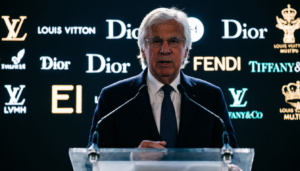 Bernard Arnault is famously measured. As the architect of the LVMH empire, his public appearances are typically masterclasses in corporate optimism and brand desirability. However, at the 2026 LVMH Annual General Meeting held in late April, Arnault stepped outside the “luxury bubble” to address a growing shadow over the global economy: the escalating conflict in the Middle East. His message was blunt: the world is facing a fork in the road, and one path leads to a “world catastrophe” that no amount of brand equity can outrun.
The “Two Scenarios” for 2026Addressing a room of high-stakes investors, Arnault distilled the remainder of the year into two stark possibilities. The Recovery Scenario: A swift, diplomatic resolution to the Middle East crisis. In this version of 2026, consumer confidence stabilizes, oil prices cool, and the luxury sector—which thrives on stability and “the feel-good factor”—returns to its traditional growth trajectory.
The Catastrophe Scenario: A widening of the conflict into a full-scale regional war involving major global powers. Arnault warned that this would trigger “extremely serious and highly negative economic impacts,” effectively stalling the global recovery and creating a crisis of a magnitude not seen in decades. “Either it will be a world catastrophe… or it will be resolved more quickly somehow,” Arnault noted. “If the second scenario is confirmed, growth will resume. If not, we will be faced with a crisis. It will not be the first, and we will continue to gain market share.” The Economic Toll on LuxuryThe warning isn’t just theoretical.
The 2026 Q1 numbers already show the “Middle East effect.” LVMH reported a 6% decline in reported revenue (to approximately €19.1 billion), with the conflict shaving an estimated one percentage point off organic growth. The impact is most visible in regional hubs like Dubai. Once a resilient corridor for high-end spenders, luxury sales at major malls reportedly plunged between 30% and 50% in March alone.
For a sector that has been grappling with “price fatigue” in the U.S. and a stuttering recovery in China, the loss of the Middle Eastern engine is a significant blow. Succession and StabilityDespite the geopolitical gloom, Arnault remained defiant regarding LVMH’s internal strength. He dismissed rumors of an immediate retirement, pointing to the recent shareholder vote allowing him to serve as CEO until the age of 85.
His strategy for the “catastrophe scenario” is clear: market share consolidation. Arnault has historically used downturns to outpace competitors, and 2026 appears to be no different. With all five of his children now in key operational roles—including Delphine at Dior and Antoine on the Executive Committee—the message is one of dynastic continuity in an unpredictable world. ConclusionBernard Arnault’s rare dive into geopolitics marks a turning point for 2026.
It is an admission that the “aspirational” economy cannot exist in a vacuum of violence and instability. As LVMH leans further into ultra-high-net-worth categories like fine jewelry and Tiffany & Co.—which remain more resilient to economic shocks—the broader luxury market is left to ponder Arnault’s warning.If the “Oracle of Luxury” is worried about a world catastrophe, the rest of the business world should be listening. The remainder of 2026 will not be defined by the cut of a blazer or the launch of a perfume, but by the ability of global leaders to steer away from the brink.